


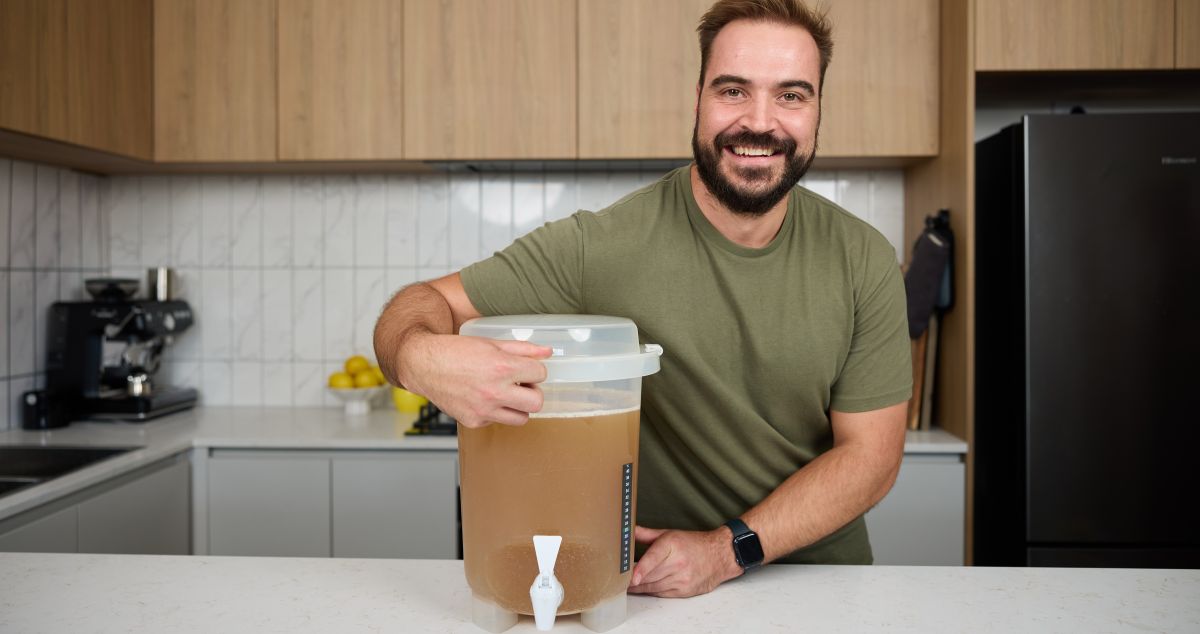
How to Brew Beer: A Complete Beginners Guide

There’s something timeless about brewing beer. For centuries, people have transformed simple ingredients - grain, hops, yeast, and water - into a drink that brings friends together and sparks celebration. And the best part? You don’t need a full home brewery, or a science degree to do it.
Brewing at home is part science, part art, and part patience. You’ll experience the aroma of malt as it dissolves, watch yeast bring your beer to life, and finally taste the satisfaction of something you created yourself.
So if you’ve ever wondered “How do you brew beer?” This guide will take you from everything you need to get started, to pouring a glass of beer of your very first brew.
What You Need To Make Beer At Home Using a Coopers DIY Brew Kit
Before you can start brewing, you need to know what goes into beer, and what equipment makes it possible. The good news: you don’t need to fill your garage with complicated gear. At its heart, brewing is about combining four key ingredients with some simple equipment and letting nature do the rest.
Ingredients: The Four Essentials

-
Malt
This cereal grain (commonly barley) provides the natural sugars yeast will ferment into alcohol and CO2; and gives beer its body, flavour and sweetness.
-
Hops
Hops add bitterness to balance the sweetness, plus unique aromas (such as citrus, floral, earthy, pine).
The good news for home brewers - Coopers DIY Beer Brewing Extracts come complete with the malt and hops pre-mixed, and ready to brew.
-
Yeast
This single-cell organism (yep that’s what it actually is!) converts sugars into alcohol and CO2 while creating subtle flavour notes.
-
Water
H20 makes up to 95% of your beer, which is why fresh, good-tasting drinking water is important.
Beer-Brewing Equipment

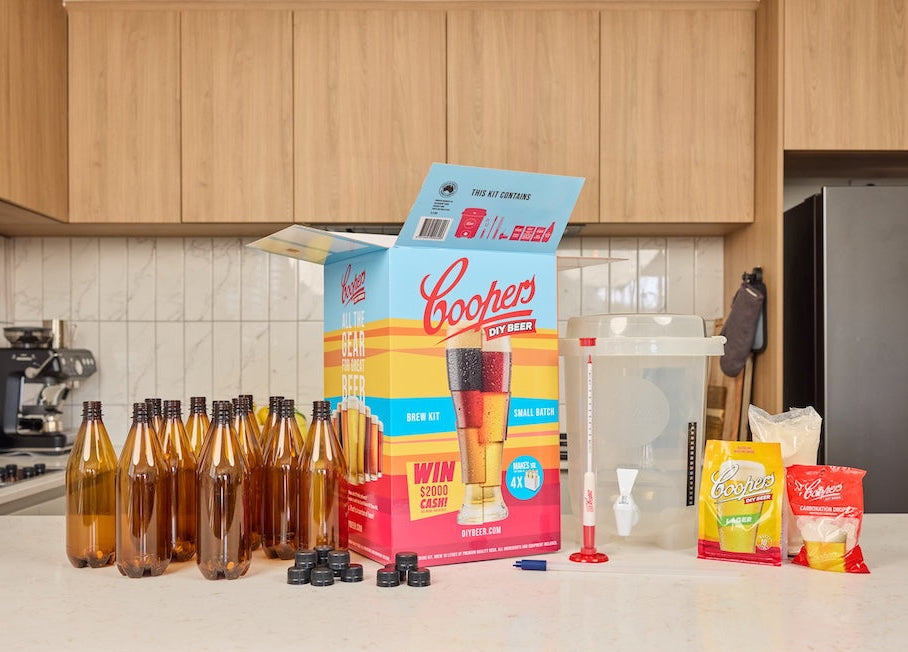
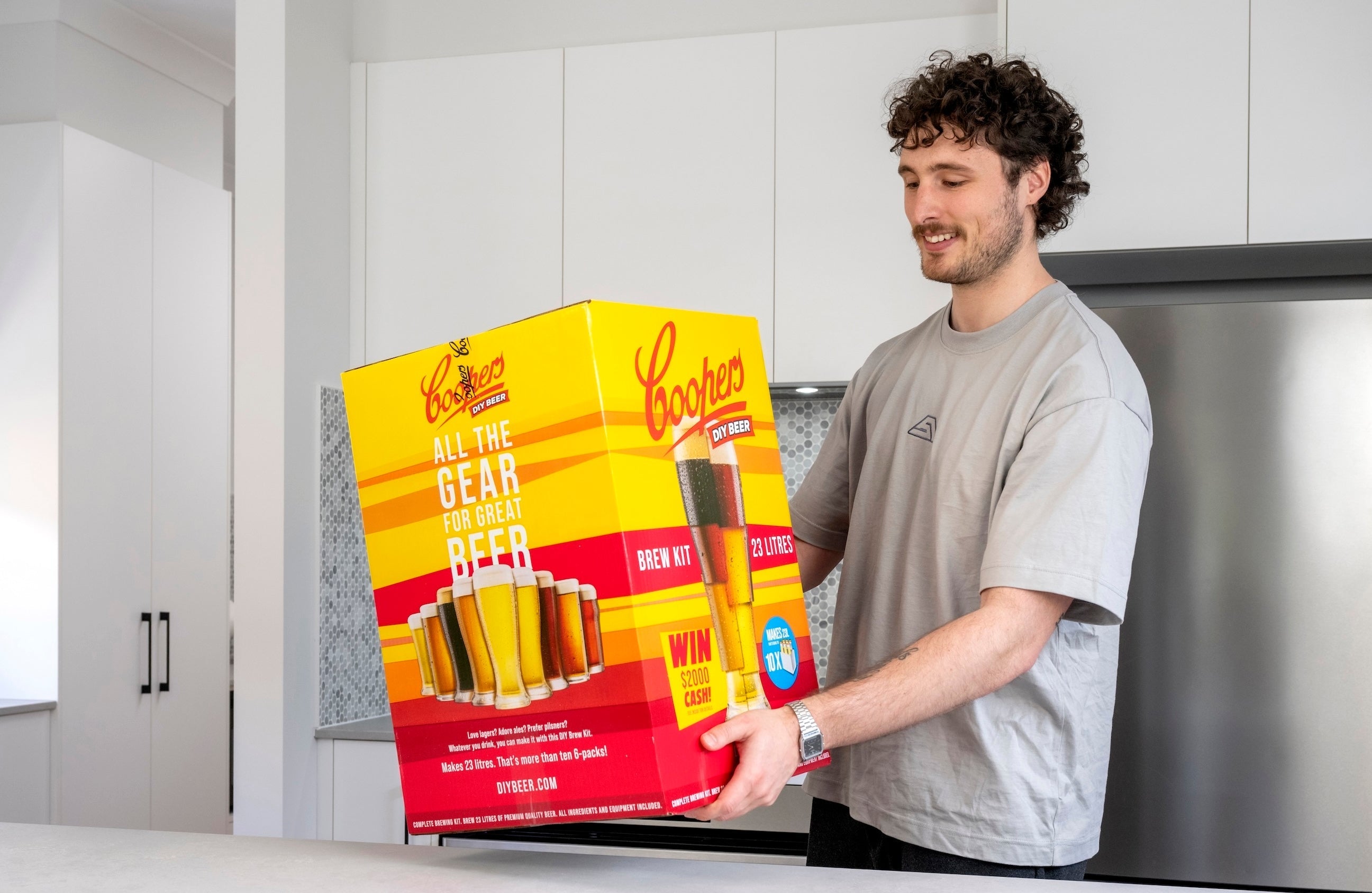
Every Coopers DIY Beer Brew Kit includes the essential equipment you need to brew beer at home:
-
Fermenting vessel - this is where the fermentation happens.
-
Snap tap and bottling valve - for easy transfers and bottling.
-
Hydrometer and sample flask - used to measure Specific Gravity (SG) levels before and after fermentation.
-
Mixing spoon - long enough to reach the bottom of your fermenter. (Supplied with 23L Kit only)
A Step-By-Step Guide To Brewing Beer At Home
So, how do you actually make beer? Here’s the full process using a Coopers DIY brew kit.
Step 1) Gather and check ingredients
-
Make sure you have everything for your chosen style of beer
-
Check best-before dates (fresher is better)
-
Use good drinking water. If your tap water is high in chlorine, use filtered water
Step 2) Clean (first time using the DIY brew kit)

-
Rinse all equipment that will touch the brew with hot water.
-
Disassemble the two-part snap tap and rinse both pieces in hot water
-
Allow to air dry
NOTE: For future brews sanitise all equipment immediately before brewing using a brewing sanitiser or by soaking in a solution of diluted unscented household bleach. If you using bleach, rinse well before brewing.
Step 3) Assemble and position the fermenter
-
Choose a permanent spot for fermentation - out of direct sunlight and at a consistent temperature. Avoid moving the fermenter until bottling day
-
Assemble the 2 piece snap-tap, wet the rubber O-rings with water and connect the tap to your fermenter
-
Attach the thermometer strip
Step 4) Do a quick “wet run” (temperature rehearsal)
-
Before your first brew, it’s best to run through the filling steps without ingredients to learn how to hit the target temperature range with your home water mix
Step 5) Start the brew: add extract and enhancer

-
Add 2 litres of warm water
-
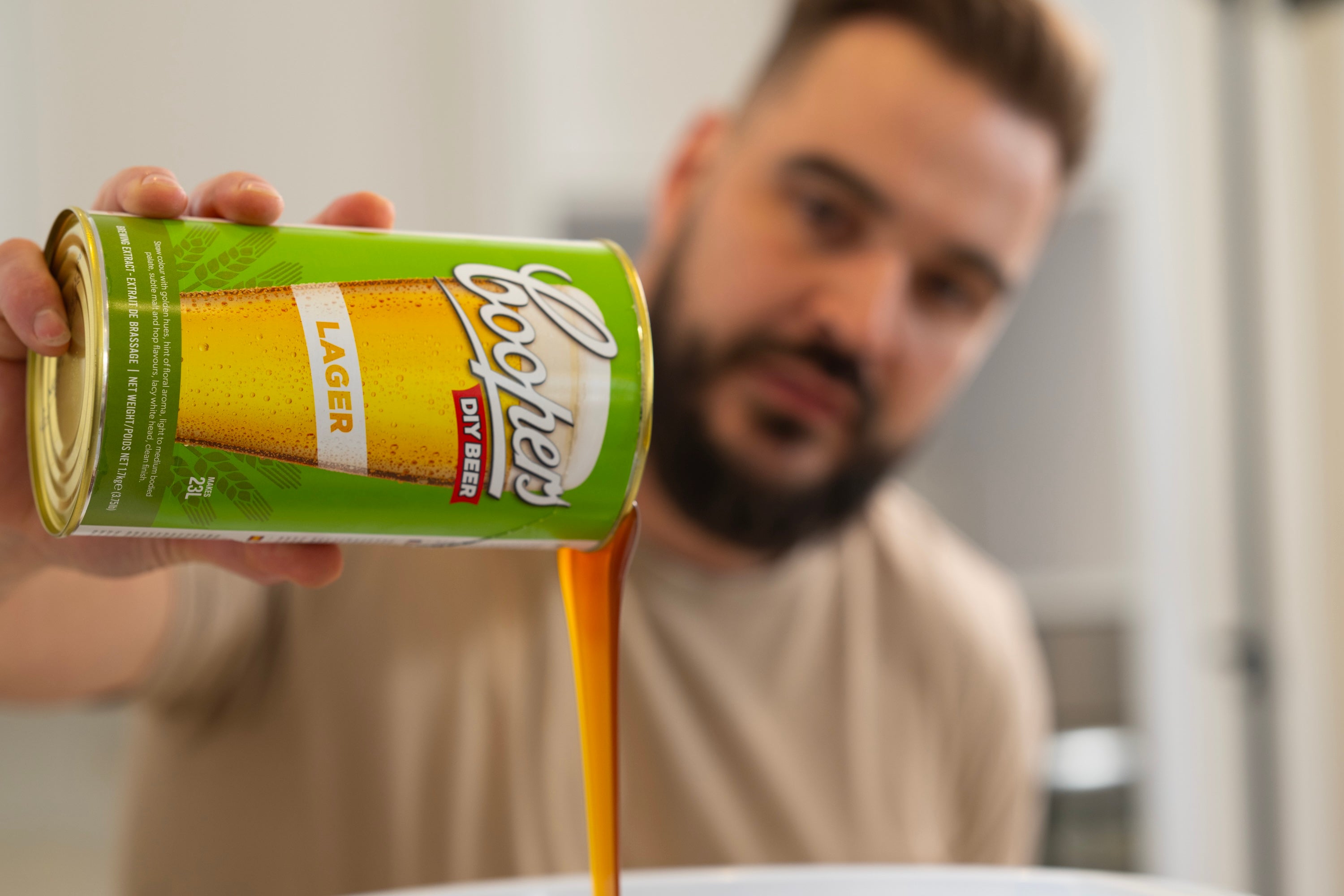
Open the brewing extract pack and pour it in
-
Rinse the pack with a little warm water to get all the contents
-
Tip the Brew Enhancer into the fermenting vessel and stir, taking care not to scratch the bottom of the fermenter
Step 6) Top up with water and set the temperature

-
Fill your fermenter to approximately ⅔ of your brew volume using cold water. Note the temperature on the thermometer strip (use the middle of the coloured panels as the reading)
-
Continue filling to your brew volume (10L or 23L), using hot or cold water as needed to land in the 21-27 °C range. Aim as close as possible to the lower end of that range (around 21–22 °C)
-
Seeing small particles floating in the brew (“cold break”) is normal
Step 7) Measure Original Gravity (OG)
-
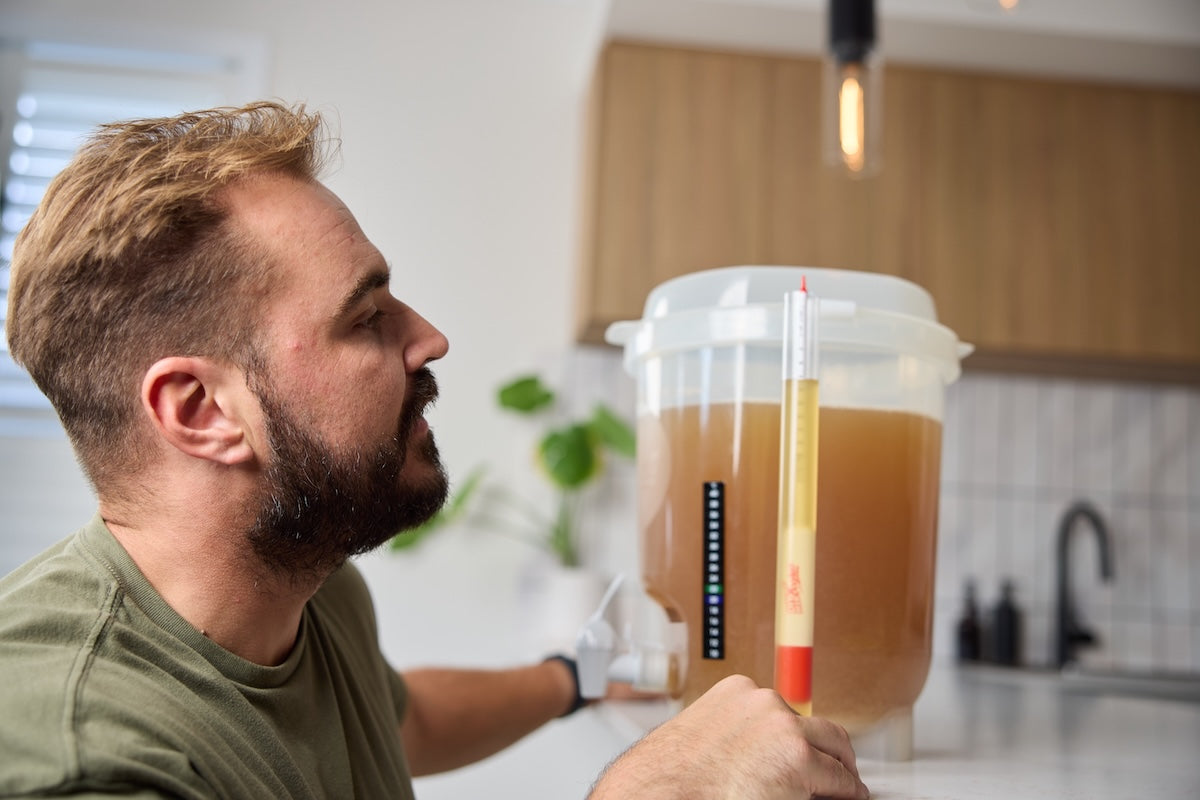
Draw a little wort from the tap to half-fill the sample tube, then discard this first sample.
-
Draw a fresh sample, enough to float the hydrometer
-
Using your hydrometer, read the specific gravity at the meniscus (the curve at the top of the liquid) and record your OG
(INSERT VIDEO LINK)
Step 8) Pitch yeast and fit the lid

-
Fit the krausen kollar to your fermenter (if using)
-
Sprinkle the dry yeast evenly over the surface but do not stir
-
Fit the lid to the fermenter (or krausen kollar) with the lid clips. If using the krausen kollar make sure you don’t clip the collar to the fermenter itself
-
Even if you’re slightly outside the target temp, it’s important to pitch yeast promptly
Step 9) Ferment
-
Leave your brew to ferment. Keeping the brew temperature consistent and near the lower end of 21–27 °C
-
Within 12 - 24 hours, you should see foam and cloudiness which means fermentation is underway
-
Do not remove the lid unnecessarily during the initial days to reduce the risk of infection
Step 10) Remove Krausen Kollar (around day 3)
-
When the foam subsides (often around day 3), remove the lid, take off the krausen kollar for cleaning, and replace the lid immediately
-
The krausen kollar can go in the dishwasher. **Dishwasher safe—use cycles below 65 °C to avoid heat-related distortion
Step 11) Check Specific Gravity (SG) for finish
-
Around day 6, take a hydrometer reading again. If the sample is very foamy, degas it first (stir or shake, then let it settle). Record your reading.
-
Test daily until Specific Gravity is stable for two days in a row - that’s your Final Gravity (FG) and means it’s ready to bottle
-
Taste and smell a small sample - it should taste and smell like warm, flat beer. If yes, proceed to bottling
Step 12) Prepare bottles
-
First-time use: rinse with warm water
-
Future brews: clean and sanitise bottles before use
Step 13) Fit the bottling valve and fill

-
Fit the bottling valve to the snap tap and turn on fully
-
Place a container under the valve to catch any drips
-
Slide each bottle over the bottling valve and fill to the brim. When you pull the bottle down off the valve, it leaves the correct headspace
Step 14) Prime, cap, and store

-
Add two carbonation drops to each 740 - 750 ml bottle or 1 drop per 375ml bottle
-
Cap tightly
-
Store bottles out of direct sunlight at or above 18 °C for at least 2 weeks to carbonate (secondary fermentation)
Step 15) Chill and enjoy
-
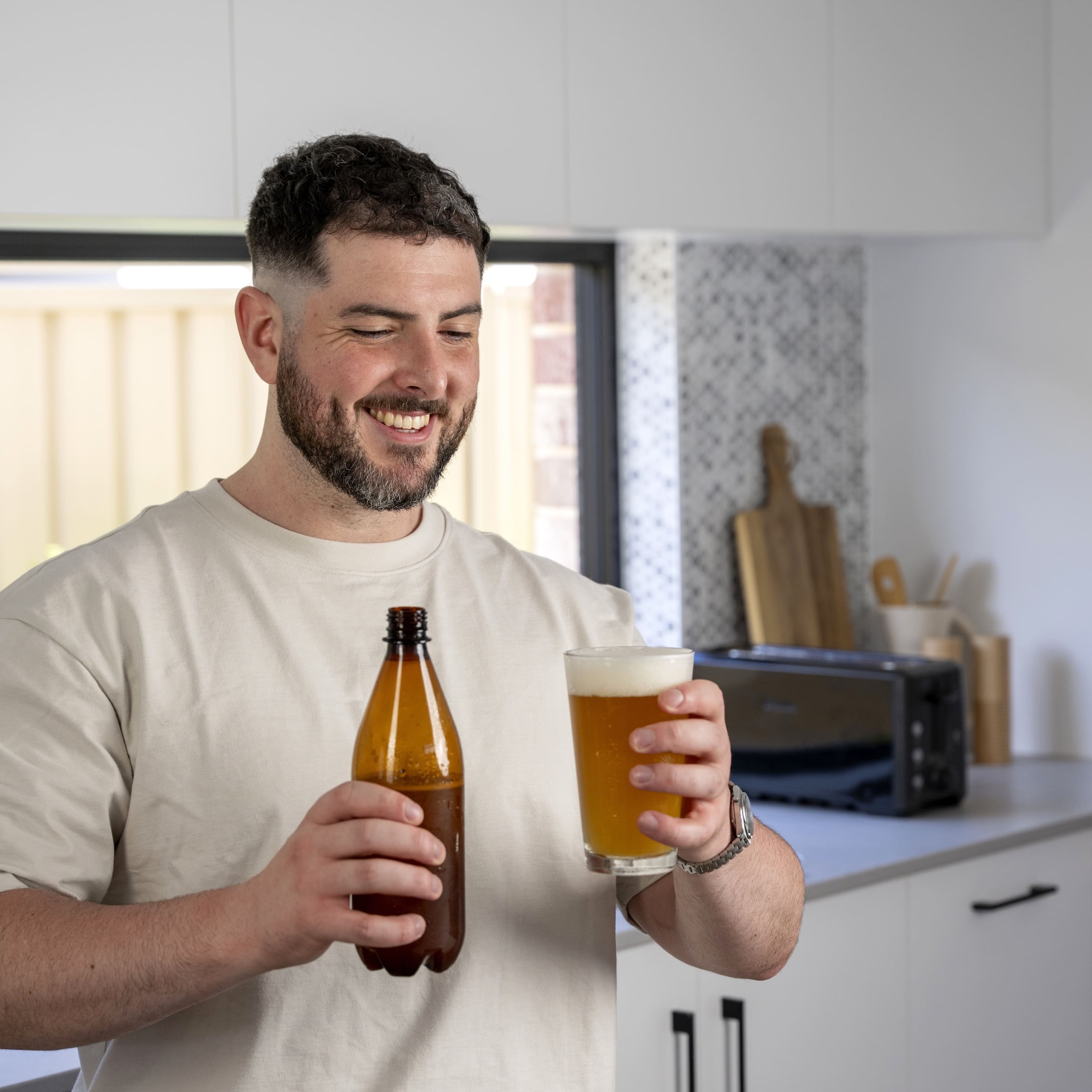
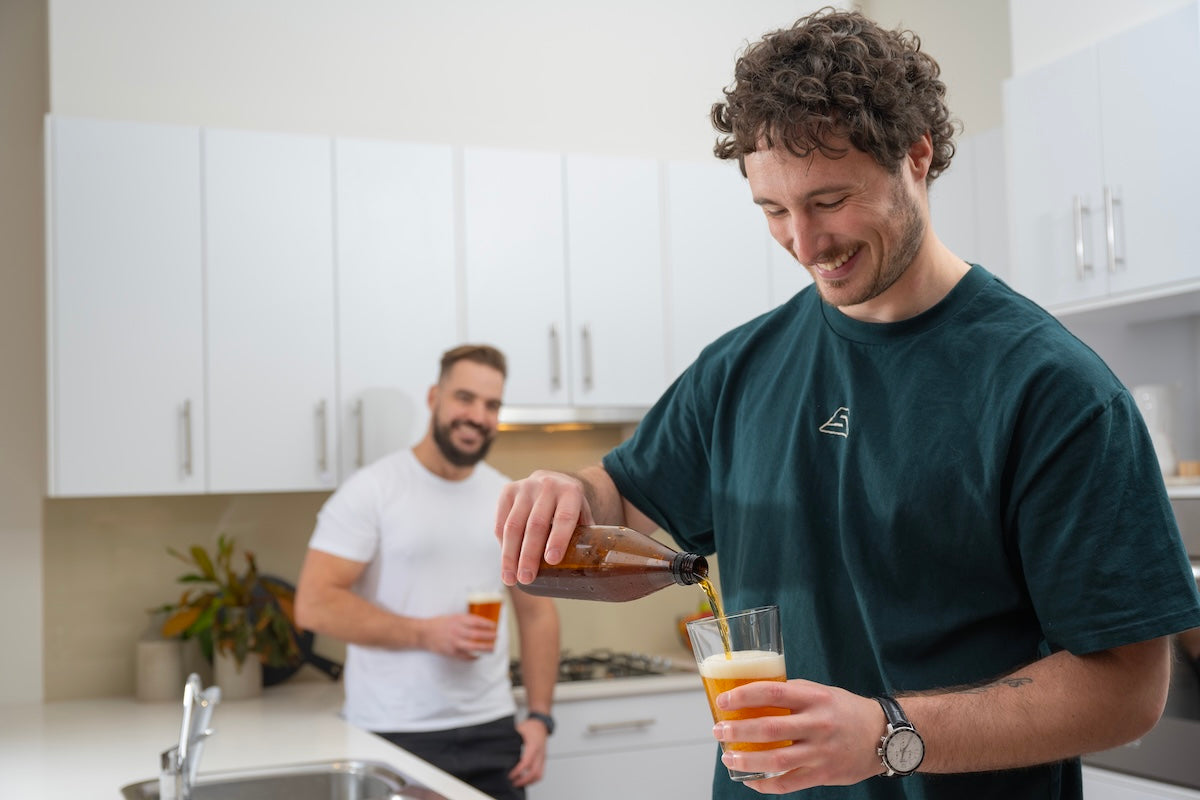
After conditioning, chill the bottles, get them nice and frosty, then enjoy your first self-brewed beer!
How To Create Different Beer Styles at Home
One of the most exciting parts of brewing your own beer is discovering how the same four ingredients can create completely different styles. A crisp lager, a roasty stout, a citrusy IPA, or even a Belgian-style wheat beer, all come down to variations in malt, hops, yeast, and fermentation conditions.
-
Lagers are brewed with bottom-fermenting yeast at cooler temperatures, giving them a clean, refreshing finish.
-
Stouts use darker roasted malts for flavours of chocolate and coffee, with a fuller body.
-
IPAs lean heavily on hops, often added late in the process or during fermentation (‘dry hopping’) for bold bitterness and big aromas.
-
Wheat beers include a high percentage of malted wheat, creating a soft mouthfeel and cloudy appearance.
When you’re ready to create your own style at home with a Coopers DIY brewing kit, you’ve got two options:
Ready-to-Go Extracts
If you’re just starting out, Coopers brewing extracts make it simple to brew beers inspired by your favourite pub pints. Each has the perfect balance of malt and hops for a specific style of beer, whether you love the easy-drinking Australian Pale Ale, a malty Irish Stout, or a refreshing Mexican Cerveza. Just follow the kit directions and you’ll get consistent, reliable results.
Recipe Customisation
For more advanced brewers keen to experiment, there’s endless room to create. Using ingredients like hops, malts, yeasts, and adjuncts, you can tweak bitterness, colour, aroma, and ABV to design your own signature brew. Want a tropical IPA with extra passionfruit notes? Try late-addition hops like Galaxy or Citra. Curious about Belgian ales? Swap in a specialty yeast strain for a spicy, fruity character. With small adjustments, you can completely transform the flavour and style of your beer.
Hints and Tips for Brewing Beer at Home

-
Keep fermentation temps steady - too hot or too cold and it’ll stress the yeast
-
Be patient - rushing fermentation often leads to off flavours
-
Store bottles upright in a dark place - this protects carbonation and keeps light from spoiling your beer
-
Sanitise everything, every time - even tiny amounts of bacteria can ruin a batch. Cleaning removes dirt, but sanitising kills invisible nasties
-
Label your bottles - note the style, brew date, and ABV. It saves confusion and lets you track how different recipes age
-
Conditioning improves flavour - while beer is drinkable after two weeks, most styles taste smoother and more complex after 4 to 6 weeks
-
Don’t stress about foam (krausen) - a thick, messy head during fermentation is a good sign that yeast is thriving
-
Join the Coopers DIY Beer Community for advice, troubleshooting and a group of people passionate about brewing!
Benefits of Brewing Beer at Home
Cost savings
One of the biggest perks of brewing your own beer is the cost savings (cost-of-living-crises anyone!?!). After the one-off purchase of your kit, every 375ml stubbie you brew works out to around 50 cents. That’s a fraction of the price you’d pay at the bottle shop or pub, without compromising on flavour. You’re not just enjoying fresh, great-tasting beer, you’re keeping more money in your pocket with every batch.
Creative freedom
Brewing your own beer opens the door to creative expression. Every batch is a chance to experiment with hops, malts, and styles, shaping flavours that reflect your taste and imagination.
Satisfying hobby
Brewing your own beer is a satisfying hobby. It’s hands-on, rewarding, and fun from start to finish. There’s pride in every batch you create, and sharing it with friends and family makes the experience even better. After all, there’s nothing quite like pouring a glass of beer you made yourself and knowing you created it from scratch.
Social connection
Brewing your own beer is a great way to bring people together. From sharing the process with friends to celebrating the finished product, it creates moments of connection that go beyond the glass. Swap recipes, trade bottles or host a tasting night - brewing at home makes beer social in the best way possible.
Sustainability
Fewer bottles and cans purchased at retail means less packaging waste. You can even reuse your own bottles again and again, plus our PET bottles that come with a DIY brew kit are recyclable!
Endless variety
You’re not limited to what’s on shelves at the store, or what’s on offer at your local pub. You can brew seasonal beers, replicate international styles, or invent something completely new.
Get Brewing With a Coopers DIY Brew Kit
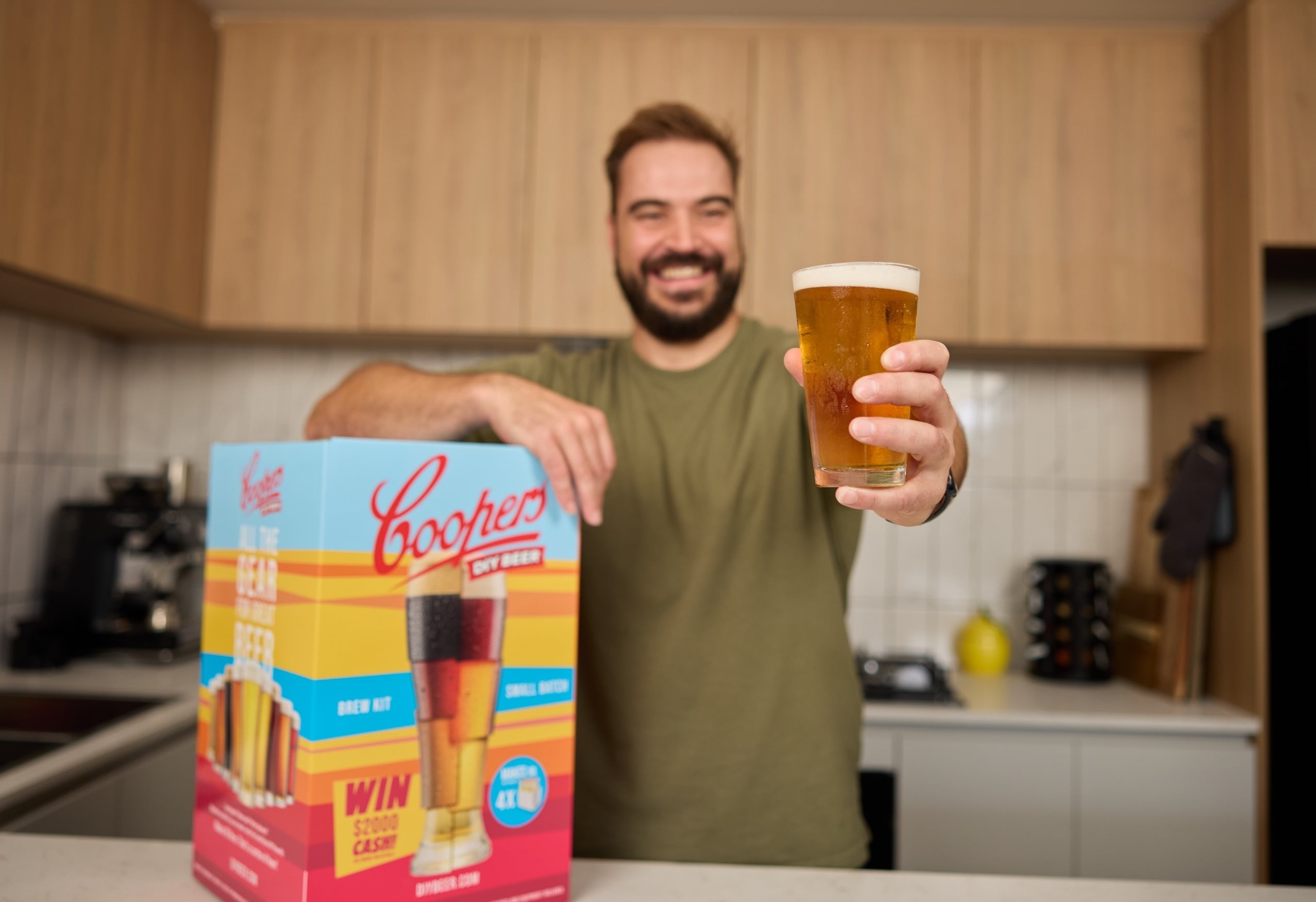
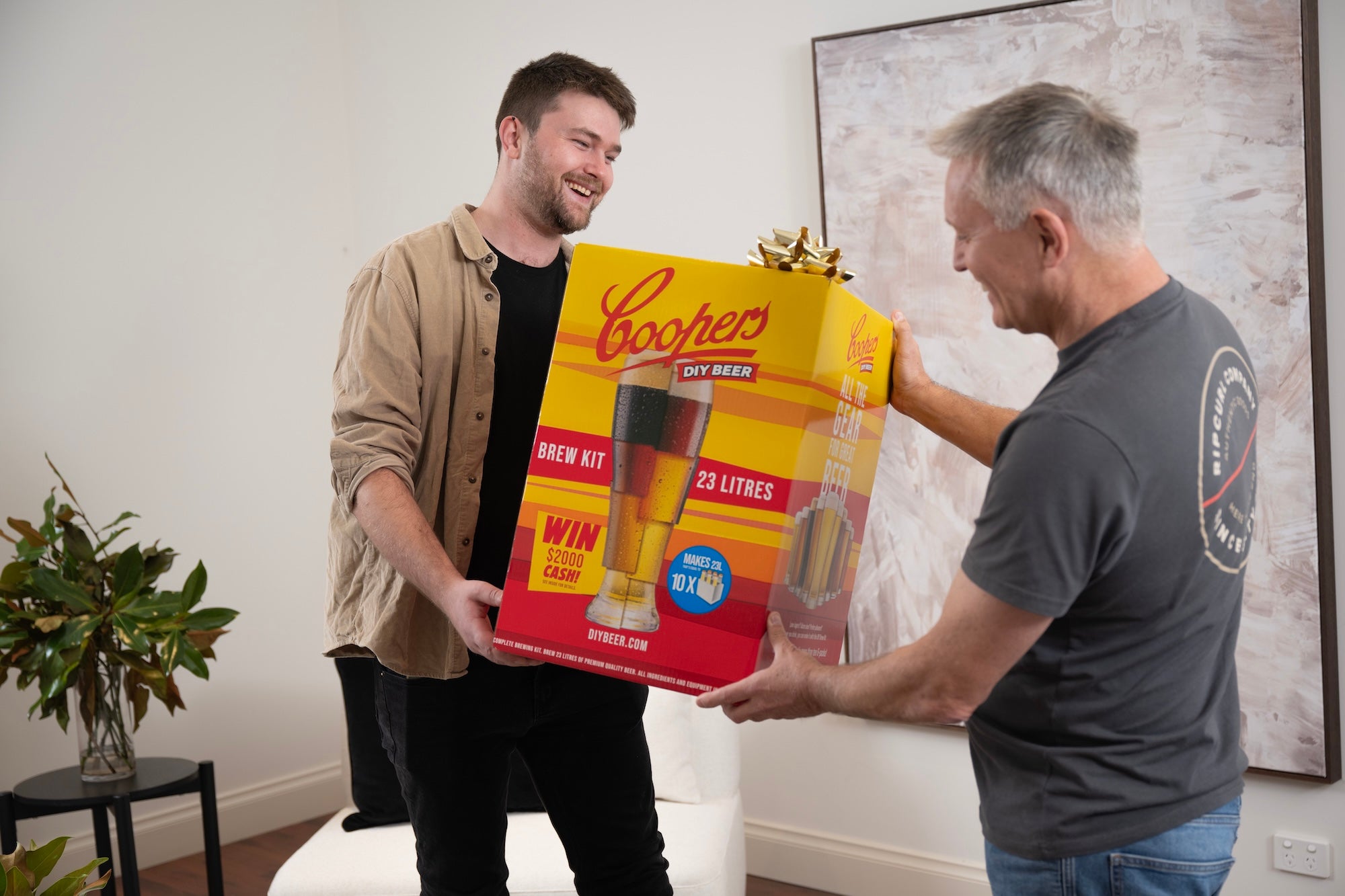
Coopers DIY Brew Kits simplify brewing into four easy steps: Mix, Brew, Bottle, Enjoy. Plus, you’ll have Australia’s largest home brewing community for support.
Shop Coopers DIY Beer Brew Kits
FAQs About Brewing Beer At Home
-
How much beer does a DIY Brew Kit make?
Choose between the Small Batch (10L) or the Classic Kit (23L).
-
What ABV can I expect?
Around 4.2% ABV when brewing to directions for the Coopers DIY Beer extracts and recipes. You can also customise this up and down to your liking by adding or reducing ingredients.
-
What are carbonation drops?
Carbonation Drops are shaped like boiled lollies with each drop containing around 3g of sugar. They’re a simple alternative to measuring out household sugar and make bottling much faster. Just add one drop to a 355/375ml bottle or two drops to a 740/750ml bottle. The drops dissolve within an hour and disperse evenly through your brew with no need to invert the bottles.
-
How do I know if my beer is fermenting?
Look for condensation inside the lid, a scum ring at the top of the beer, sediment on the bottom, cloudy samples, and a dropping SG reading - these are all reliable indicators that your beer is fermenting.
-
Is it worth it to brew your own beer?
Absolutely - cheaper per glass, better flavour, more variety and creative freedom, and a hobby that only gets more rewarding - need we say more?
-
How difficult is it to brew your own beer?
Brewing can be as easy, or as difficult as you make it. Starting without a brew kit or the proper equipment will be harder, while using a brew kit, or even an automated brewing machine, makes it much simpler. Using a Coopers DIY brew kit lets you brew in four simple steps.
-
Which is the easiest style of beer to brew?
Generally a Pale Ale is the easiest to brew as ales ferment quickly and are ready to enjoy within a few weeks - especially when brewed with a beer enhancer instead of sugar for improved flavour and aroma.
Brewing beer at home is a mix of science and creativity. Follow the steps, keep things clean, and soon you’ll be pouring fresh, handcrafted beer that’s all your own.



Leave a comment
This site is protected by hCaptcha and the hCaptcha Privacy Policy and Terms of Service apply.