



Curious about Brewing?
How to Brew Beer at Home: The Curious-Brewers Guide
Ever wondered if you could just… make your own beer? You can - and it's easier than you think. Brewing at home comes down to four steps: mix, brew, bottle, enjoy. No brewery, no science degree and not much space needed.
It's the same process the big breweries use, just scaled down. You combine malt and hops with water, add yeast, and over a couple of weeks that mix becomes fresh beer you brewed yourself. If you've been curious about how to brew your own beer, here's what you need and how easily it all comes together.
The Essentials for Brewing Beer at Home
Great beer comes down to a handful of ingredients, a few key pieces of equipment and the right process. Here’s what goes into every brew - and what each part actually does.

What's in an Extract ?
Two ingredients make up your extracts - malt and hops.
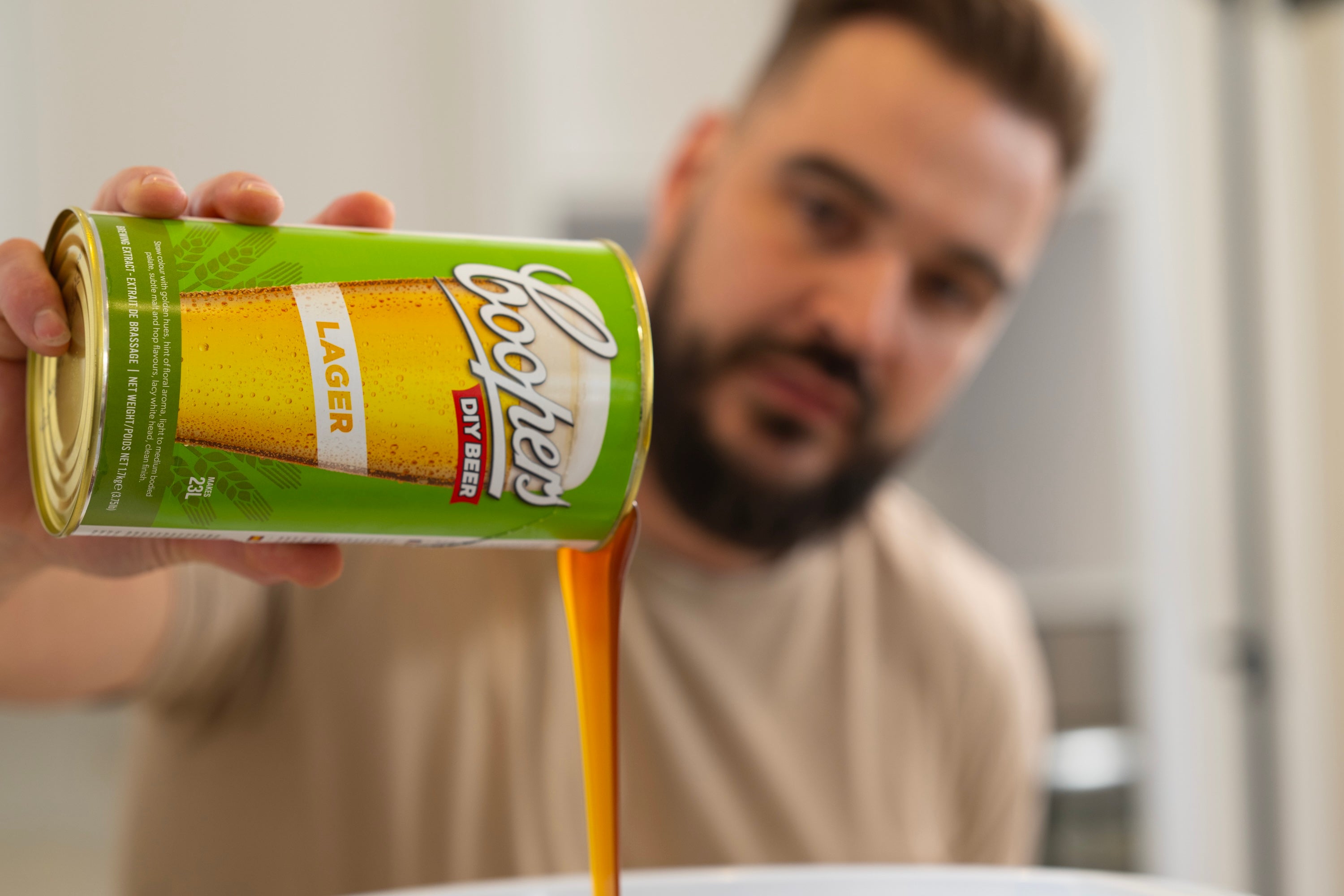
Coopers brewing extract cans containing malt and hops are ready-to-use concentrate meaning you don’t have to source and measure them separately !
Malt
Malt - the sugary base made from cereal grains. It’s what the yeast feeds on, and it gives your beer its body, colour and backbone of flavour.
Hops
Hops -the flowers that balance malt’s sweetness with bitterness and aroma, from earthy and floral to citrusy and tropical depending on the variety.
Yeast
Yeast is the 'living' ingredient that does the real work. Once added, it feeds on the sugars in your malt and converts them into alcohol and carbon dioxide. That process is fermentation, and it's what turns sweet wort into beer.
It also shapes how your beer tastes. Different strains bring out different characters - ale yeasts tend to give fruitier, fuller flavours, while lager yeasts ferment cooler for a cleaner, crisper finish.
Two things help yeast do its job well: a stable temperature (most strains have a sweet spot, usually noted on the pack) and a clean, sanitised setup so nothing competes with it. Get those right and the yeast takes care of the rest.
Equipment
The essentials are:
- A fermenter - a food-grade vessel with a lid where your beer ferments.
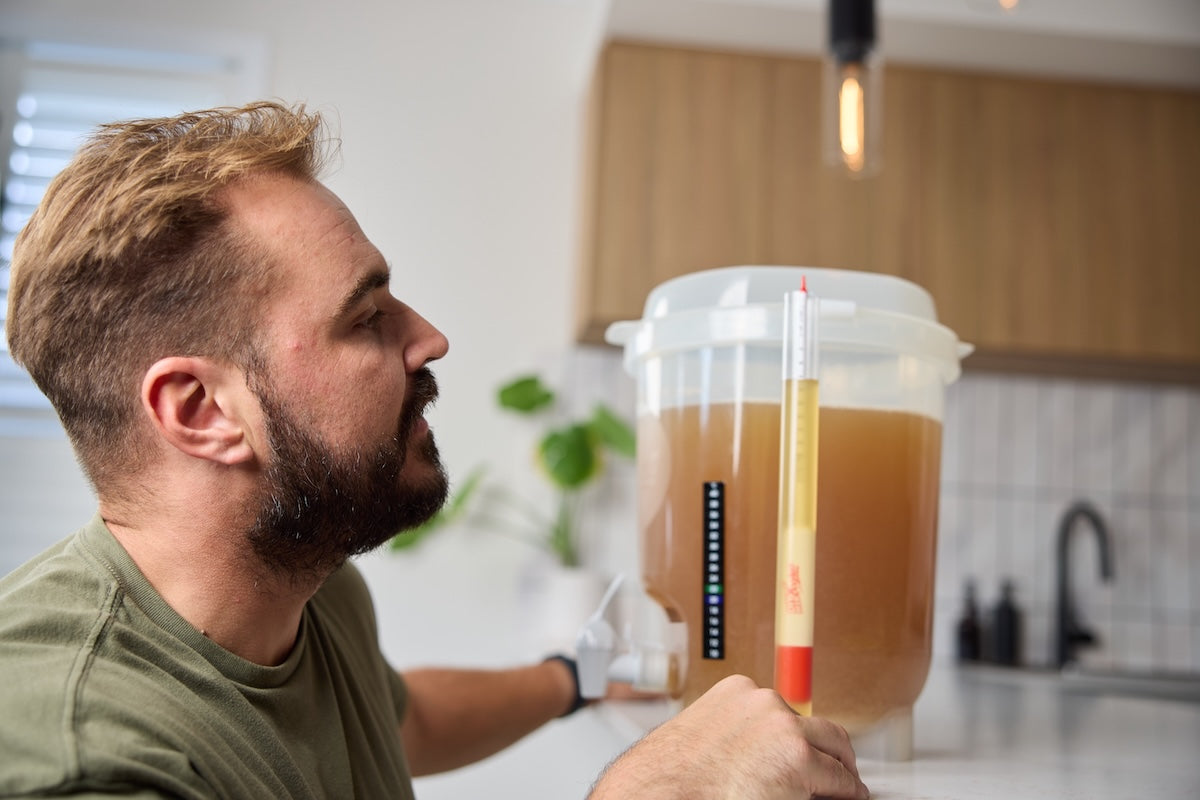
- A hydrometer - a simple tool that tells you when fermentation is finished and how strong your beer is.
- Bottles - to store and carbonate the finished beer.
- A sanitiser - not glamorous, but the single most important thing for clean, contamination-free beer.
Reasons you Should Brew your Own Beer
Still on the fence? Here’s why so many people who try brewing never go back to buying off the shelf.
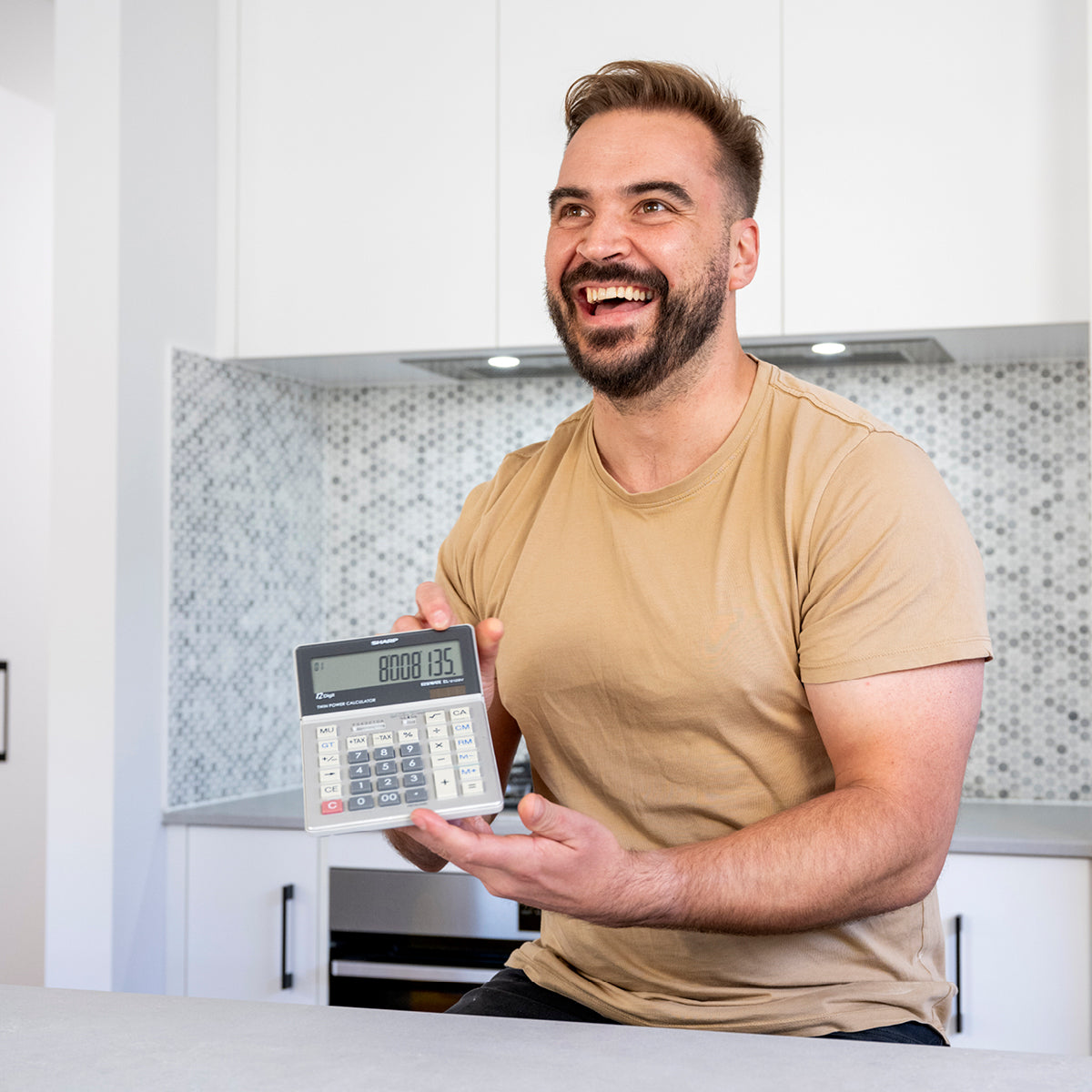
It saves you money
Once you’ve got your kit, brewing your own costs a fraction of bottle-shop price. The savings stack up fast - especially if you brew regularly. With a Coopers DIY Beer Brew Kit, after the initial investment, each brew will cost you approx $0.50 per stubbie.
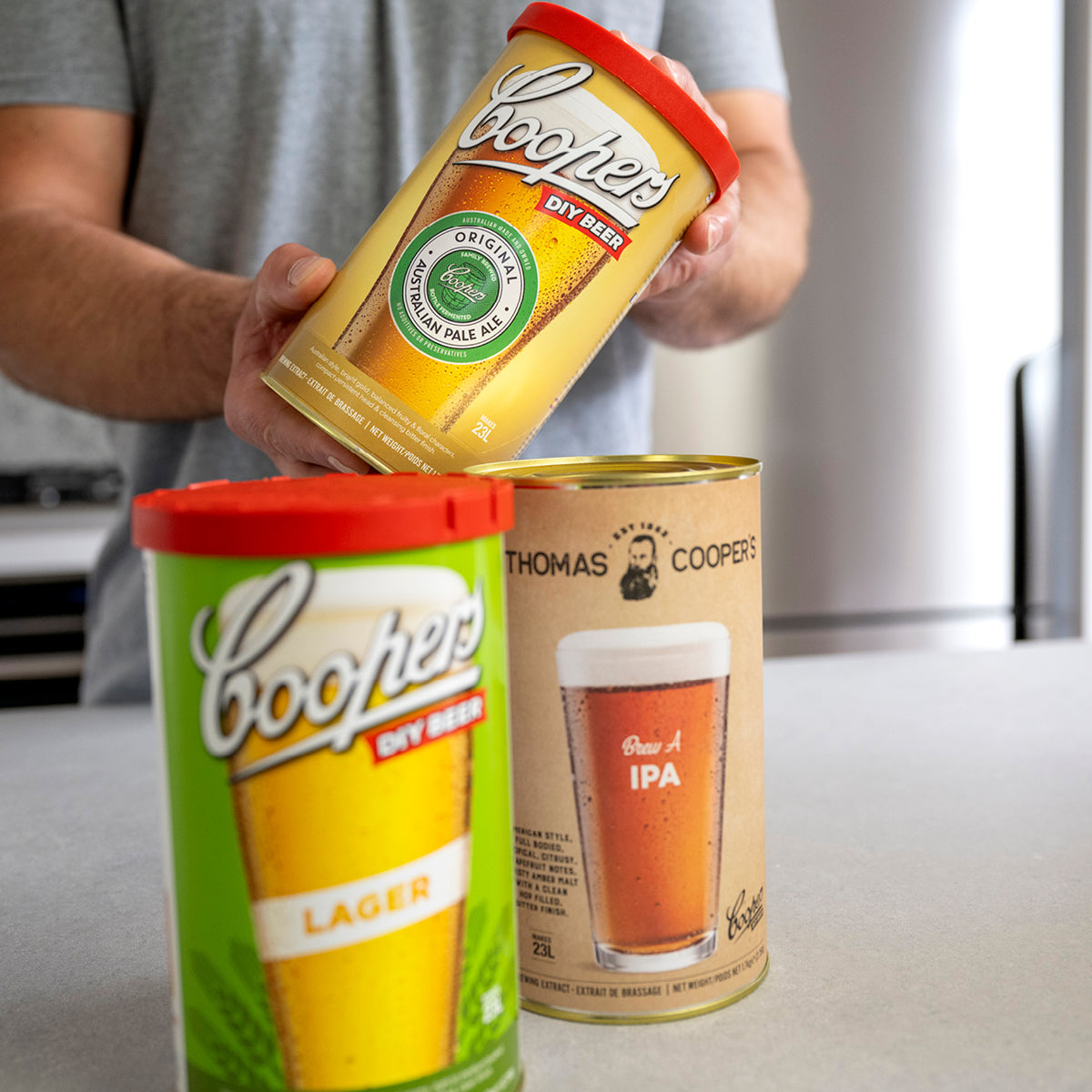
Brew the styles you enjoy
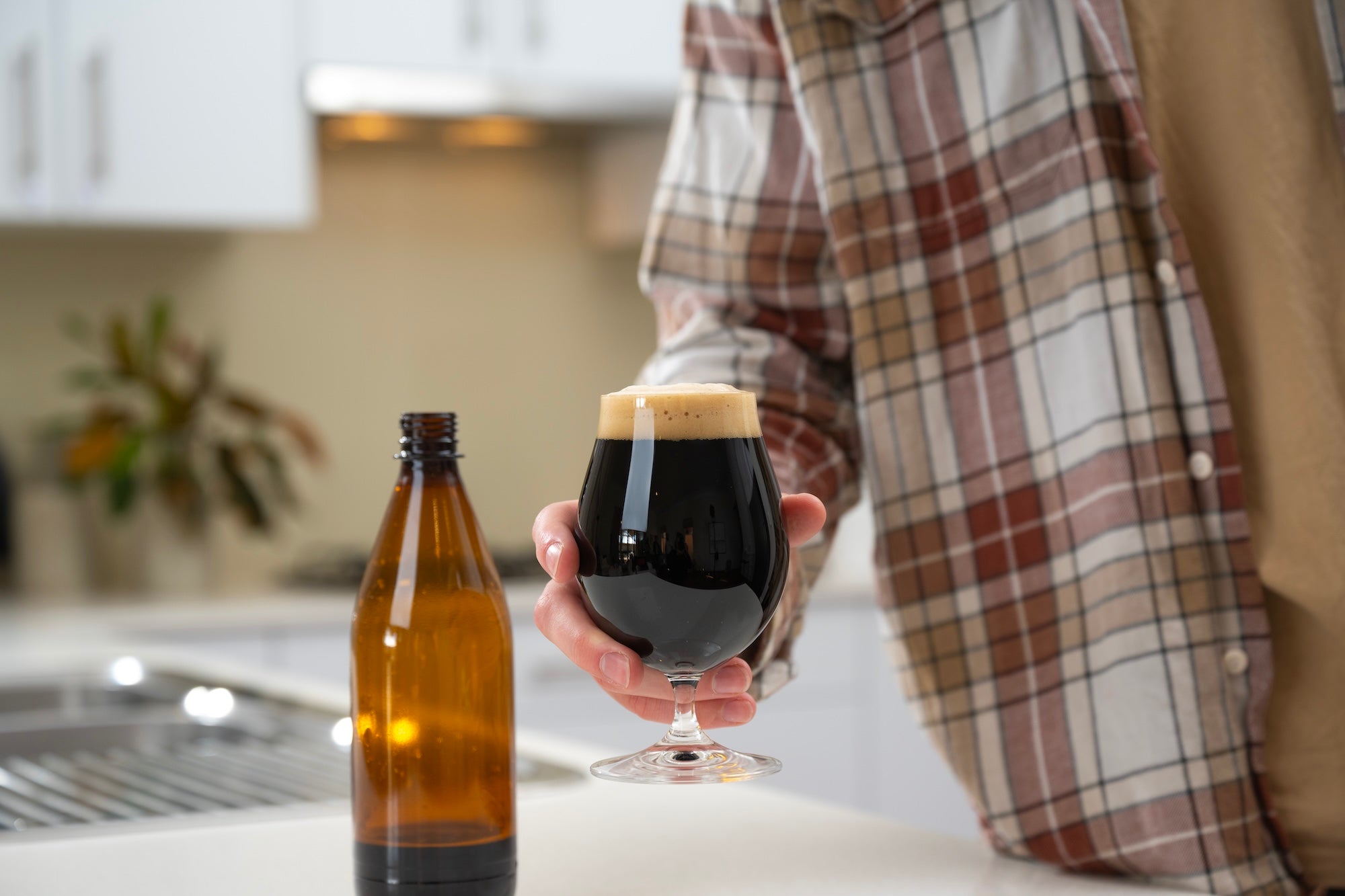
Lager, Pale Ale, hazy IPA, chocolate stout, crisp summer ale - brewing your own opens up a huge range of styles, including ones you might never have considered trying. You’re in control of exactly what ends up in the glass, and you get to pick your favourites.
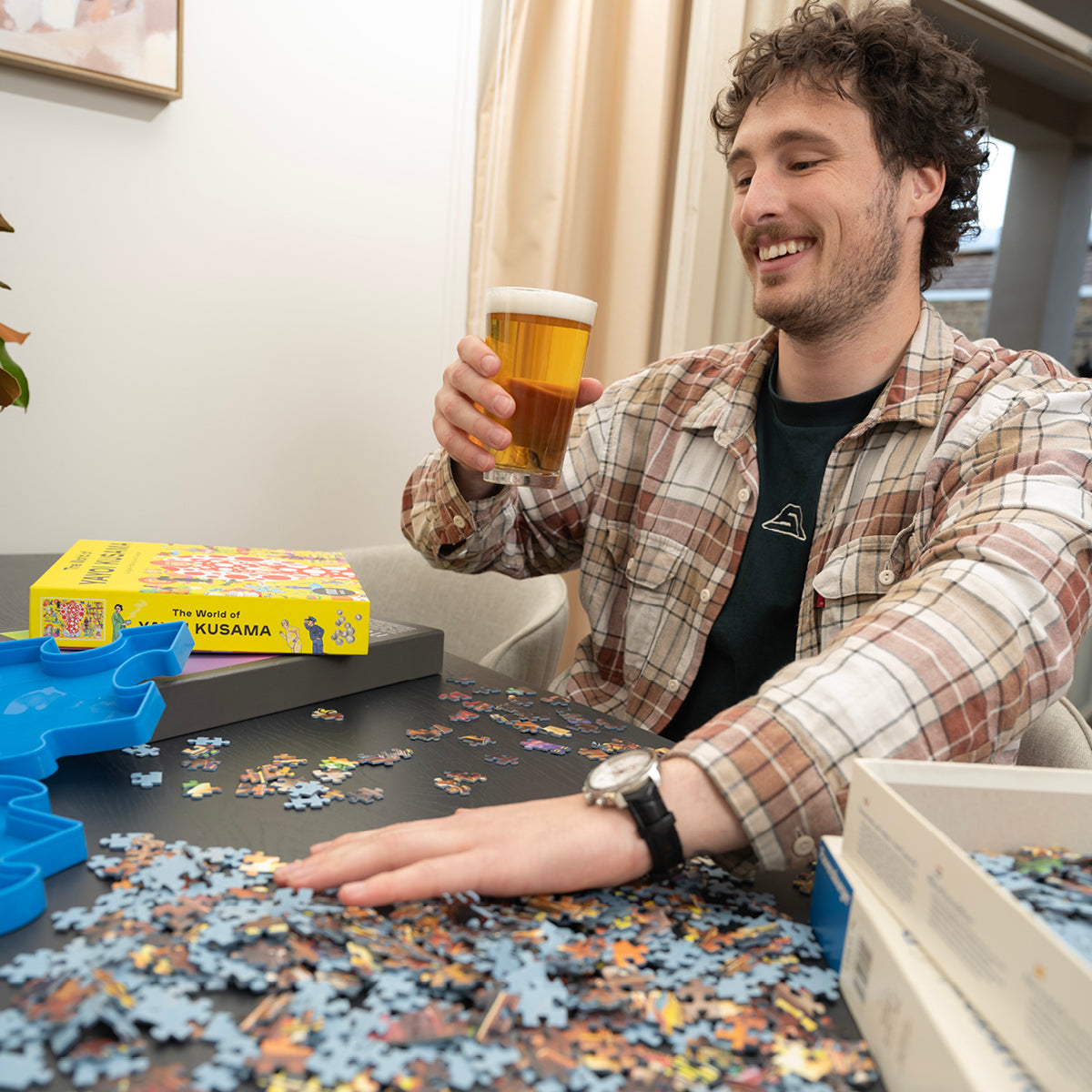
The most rewarding hobby
There’s real satisfaction in making something with your own hands and sharing it with mates. Brewing is creative, hands-on, and ends in a reward you can actually enjoy.
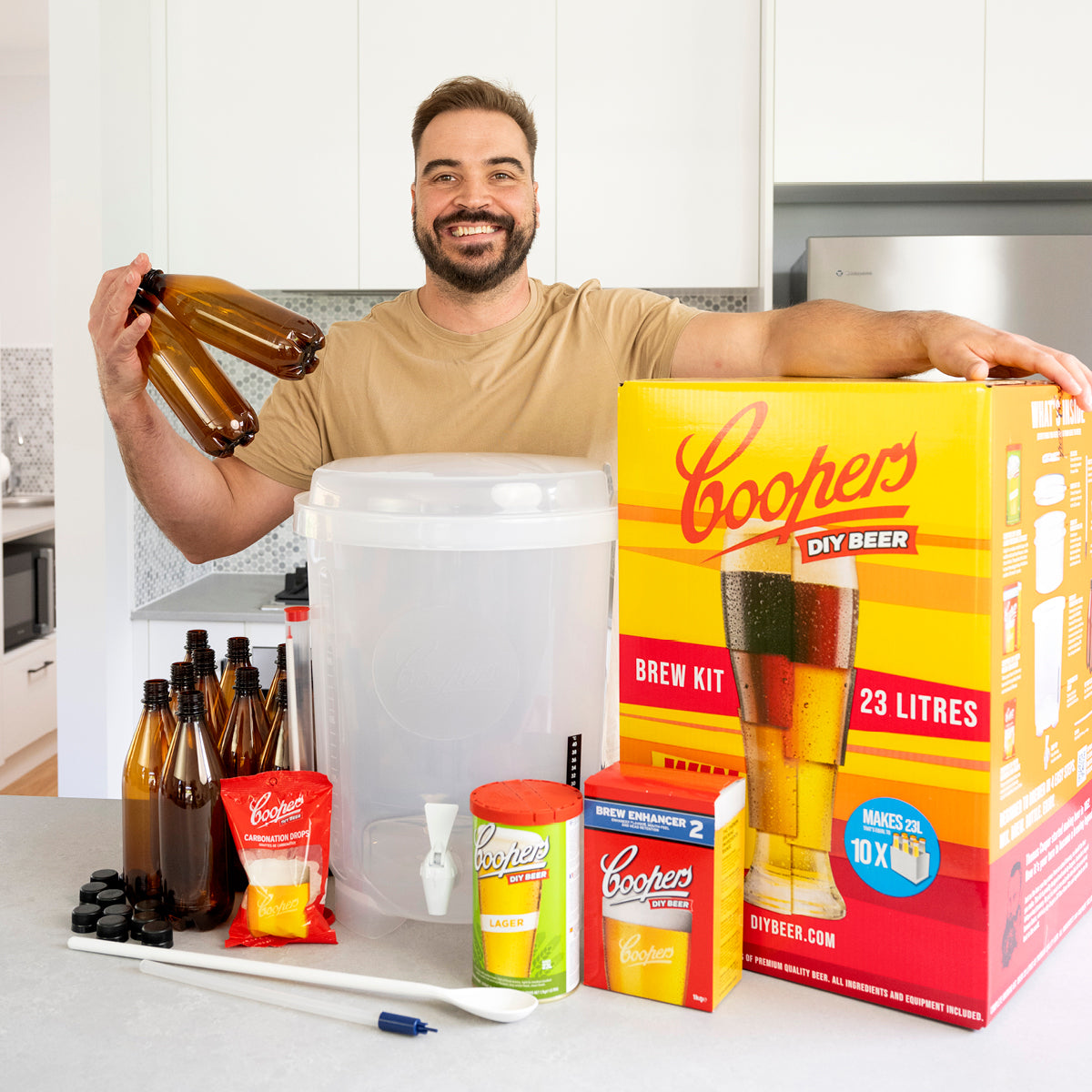
It's easier than you think
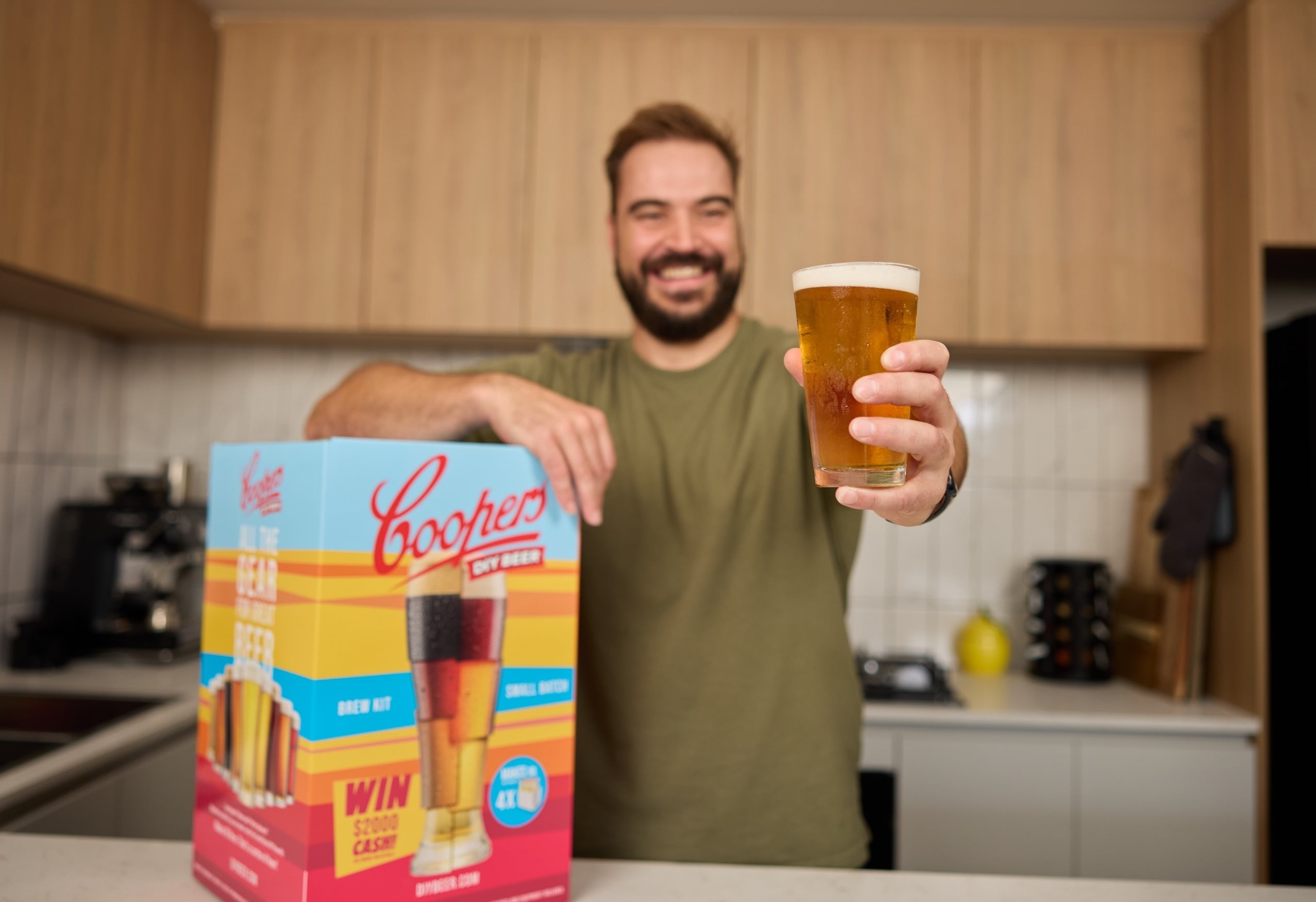
No shed. No garage. No experience needed. A modern brew kit fits on a kitchen bench, comes with clear instructions, and is built so a complete beginner can nail their first batch. Brewing that fits your life, not the other way around.
It saves you money
Once you’ve got your kit, brewing your own costs a fraction of bottle-shop price. The savings stack up fast - especially if you brew regularly. With a Coopers DIY Beer Brew Kit, after the initial investment, each brew will cost you approx $0.50 per stubbie.
Brew the styles you enjoy
Lager, Pale Ale, hazy IPA, chocolate stout, crisp summer ale - brewing your own opens up a huge range of styles, including ones you might never have considered trying. You’re in control of exactly what ends up in the glass, and you get to pick your favourites.
The most rewarding hobby
There’s real satisfaction in making something with your own hands and sharing it with mates. Brewing is creative, hands-on, and ends in a reward you can actually enjoy.
It's easier than you think
No shed. No garage. No experience needed. A modern brew kit fits on a kitchen bench, comes with clear instructions, and is built so a complete beginner can nail their first batch. Brewing that fits your life, not the other way around.
The Beer Brewing Process, Simplified
Brewing follows the same four steps every time:
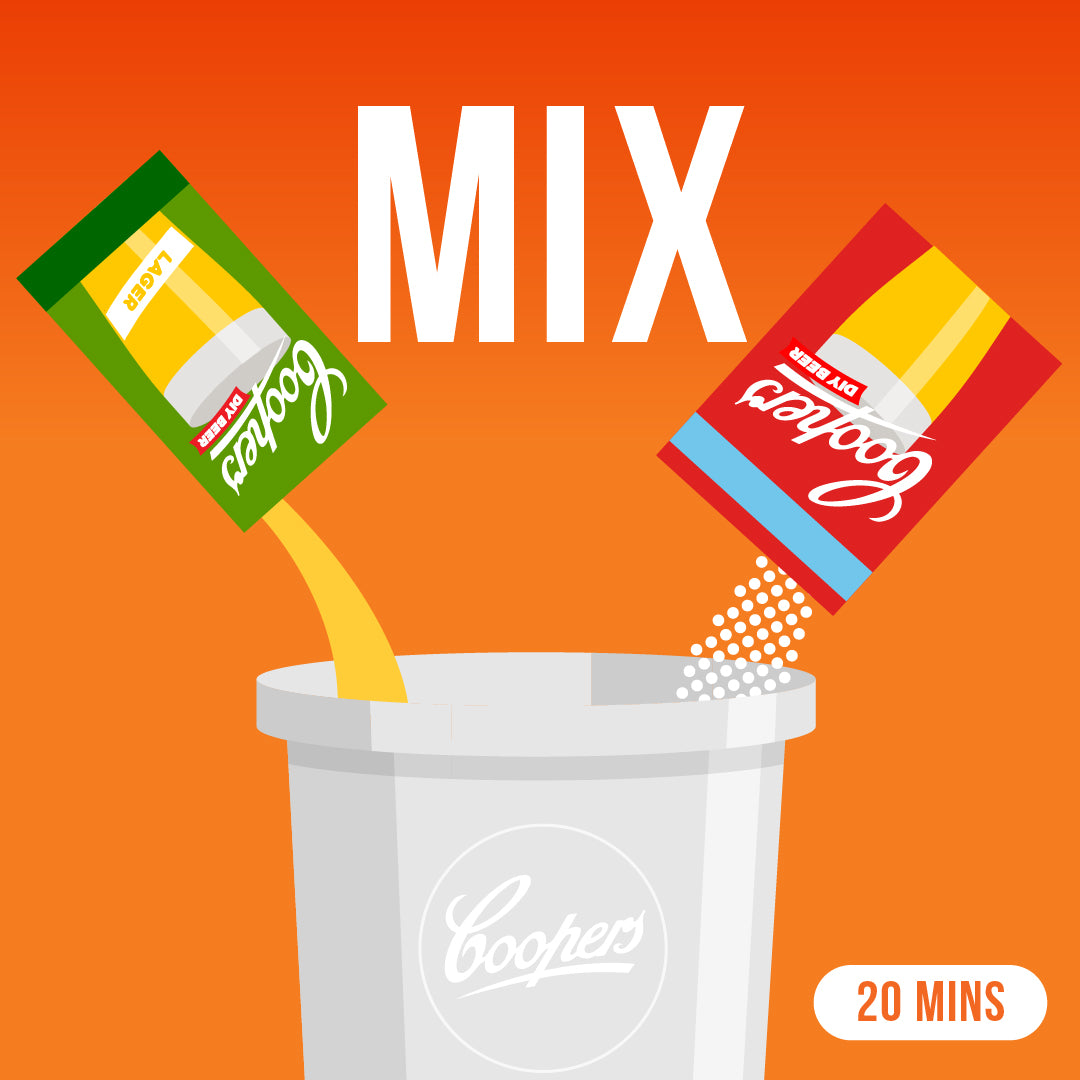
Combine your brewing extract and enhancer in the fermenting vessel with water and stir. Sprinkle the yeast on top, to create the base of your brew known as wort, then pop the lid on top.
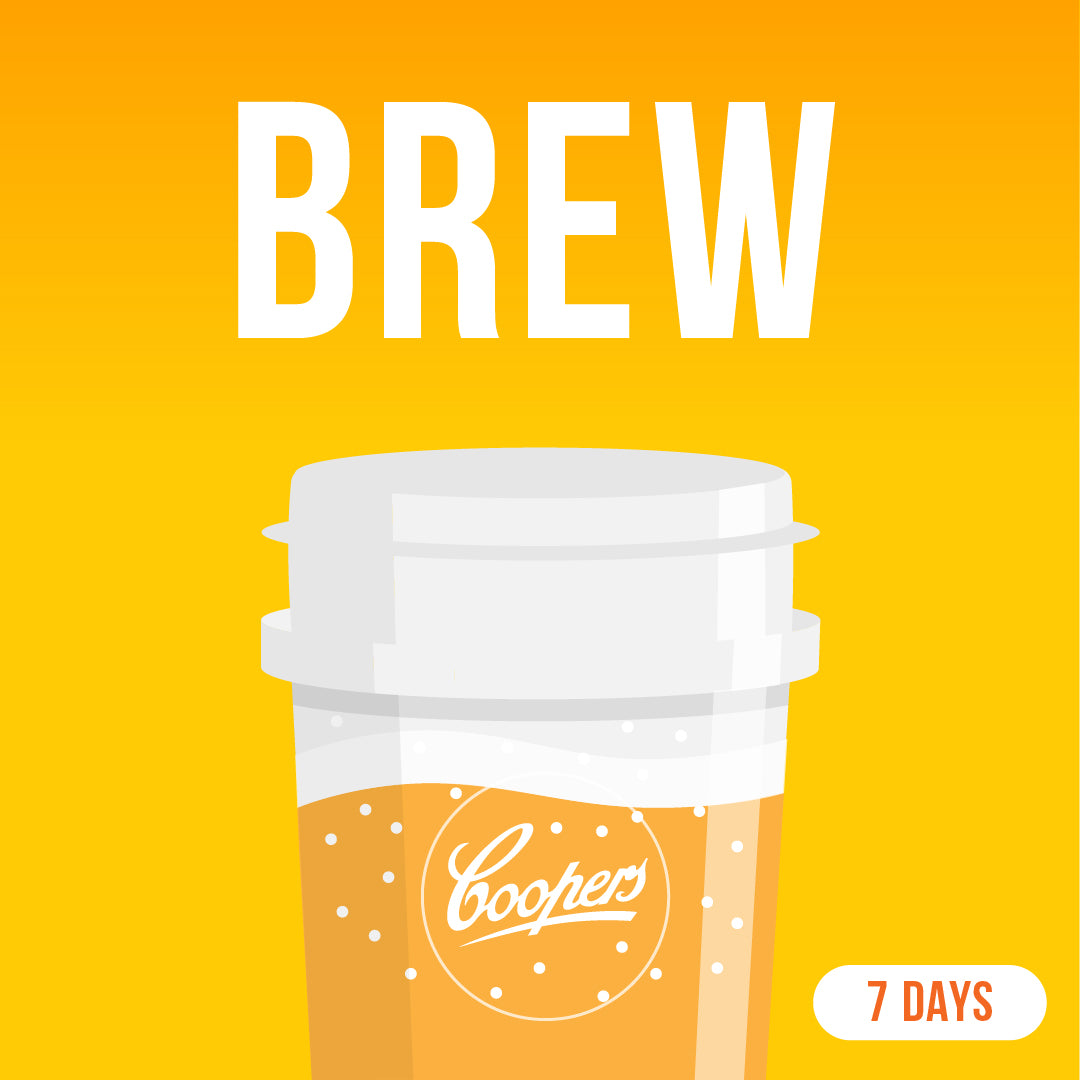
Position your fermenter somewhere with a steady temperature between 21-27°C and let the yeast do the work - turning sugars into alcohol. A quick hydrometer reading tells you when it’s done.
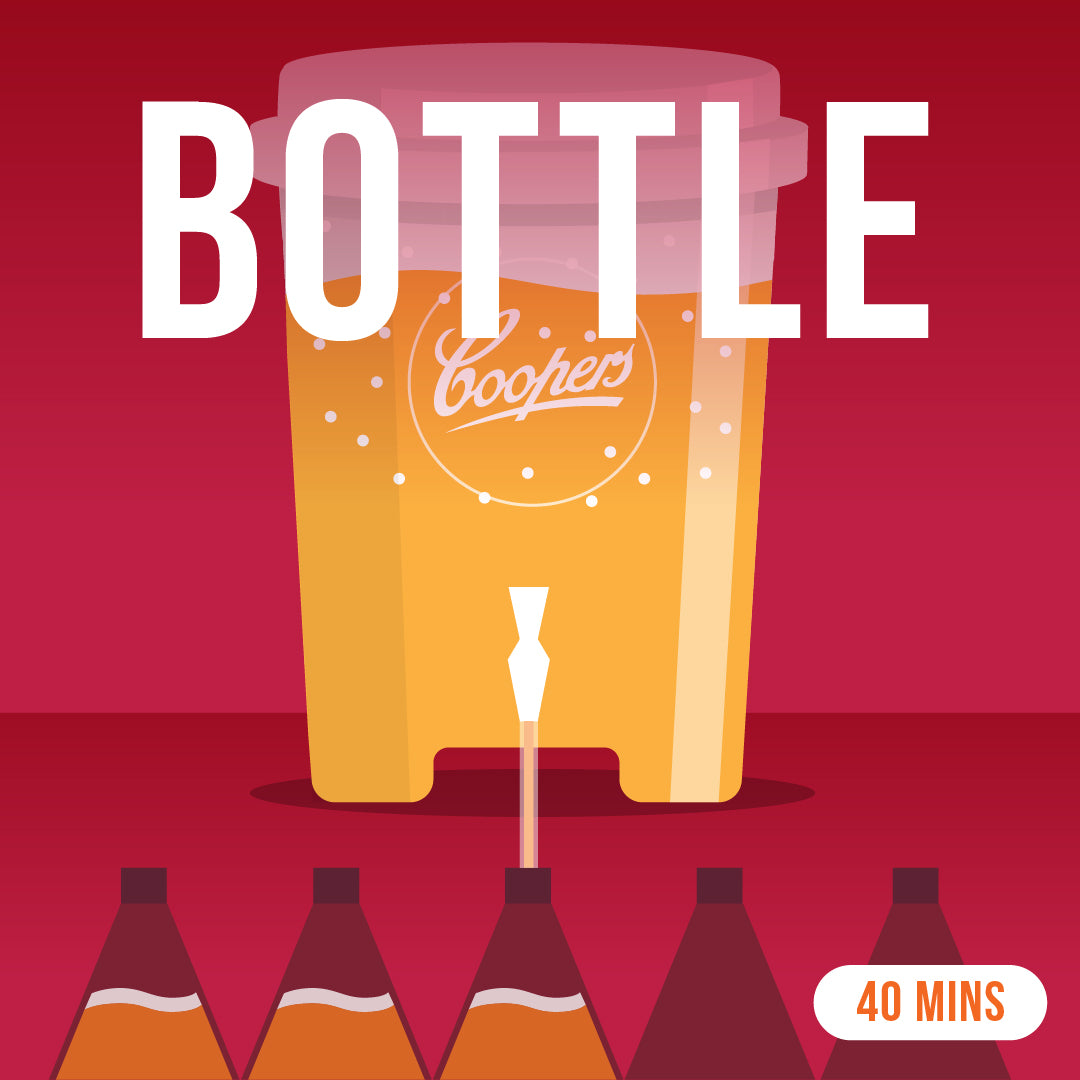
Once fermentation finishes, transfer your beer into clean, sanitised bottles. Add carbonation drops to each to naturally carbonate your beer in the bottle. Cap tightly.

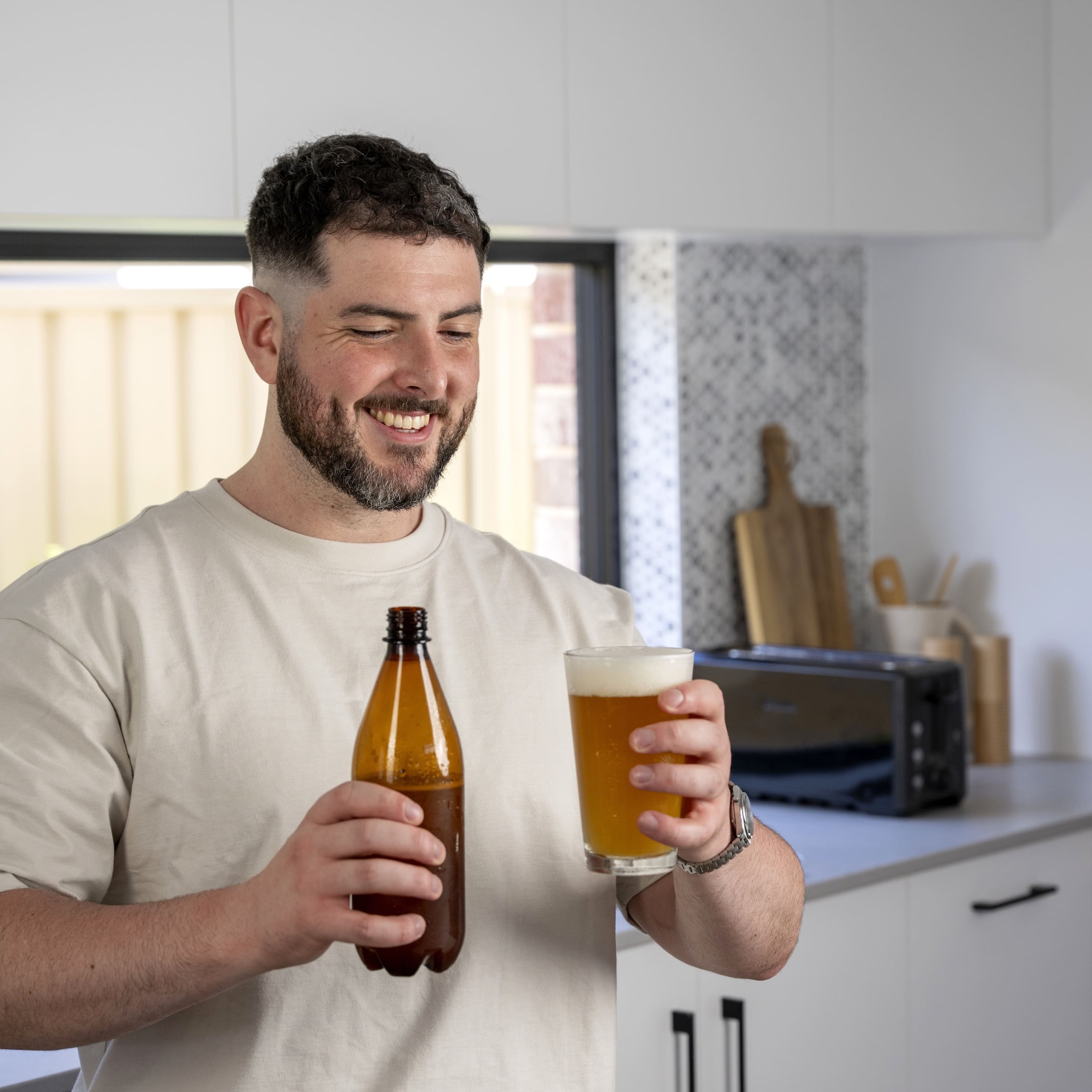
Place your bottles in a cupboard, at room temperature, to carbonate for 2 weeks. Then chill, pour and enjoy. That first sip of a beer your brewed yourself is truly satisfying!
If you can use a can opener, you can brew a beer.
The Coopers Brew kit is designed to make the process as straightforward as possible.
No complicated equipment, no guesswork - the hydrometer tells you when you're ready to bottle, and carbonation drops mean no measuring sugar.
Choosing the right brew kit
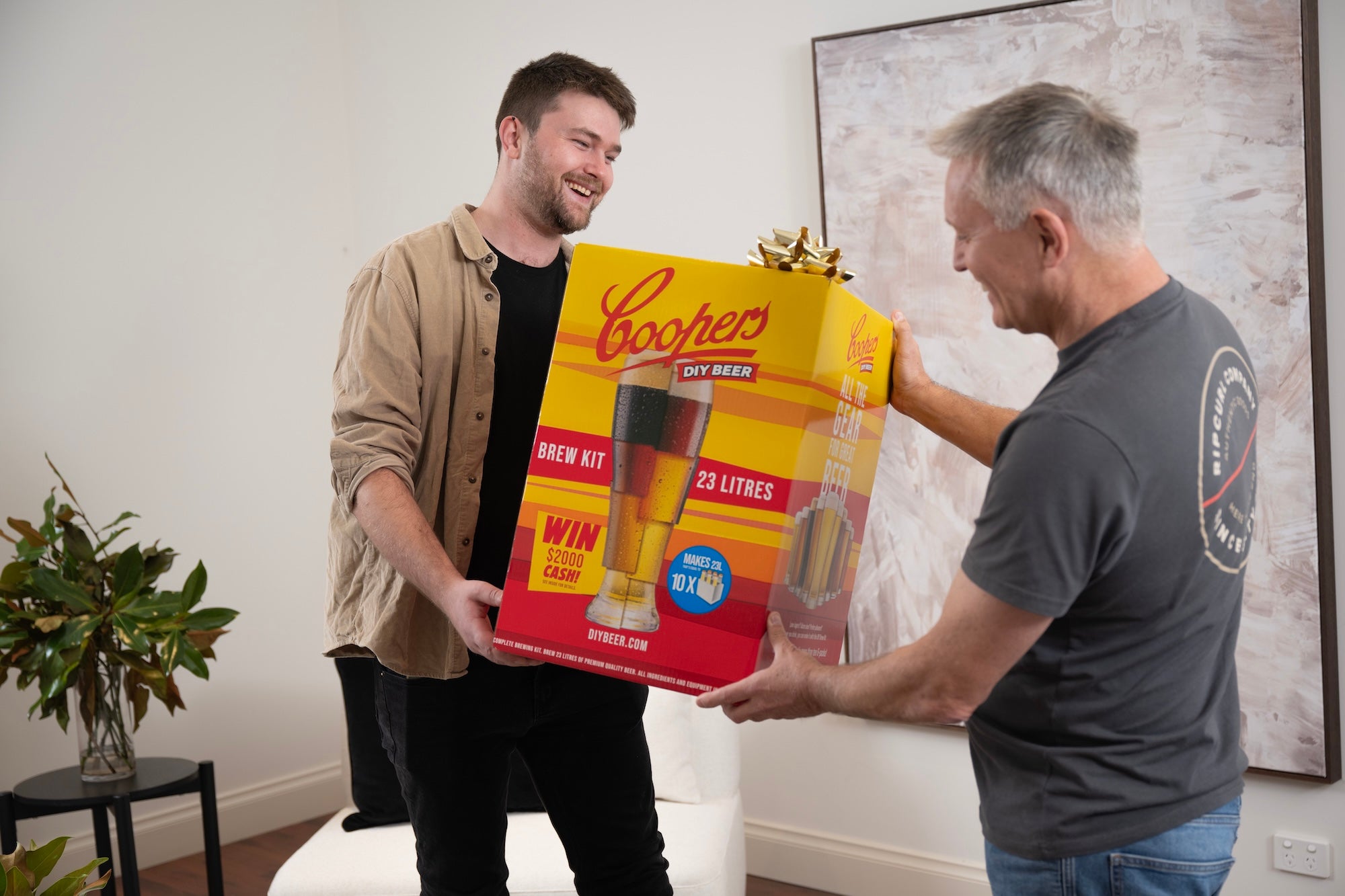
Coopers DIY Beer Brew Kits are worth their weight in gold. They bundle the fermenter, lid, hydrometer, bottles and your first extract into one box. Everything a beginner needs for that first batch - with equipment that can be used for every brew after.
Coopers DIY Beer Brew Kits come in two sizes - a 10L Small Batch and a 23L Classic - to suit every type of brewer. To get you started both kits come complete with a Coopers Lager brewing extract.
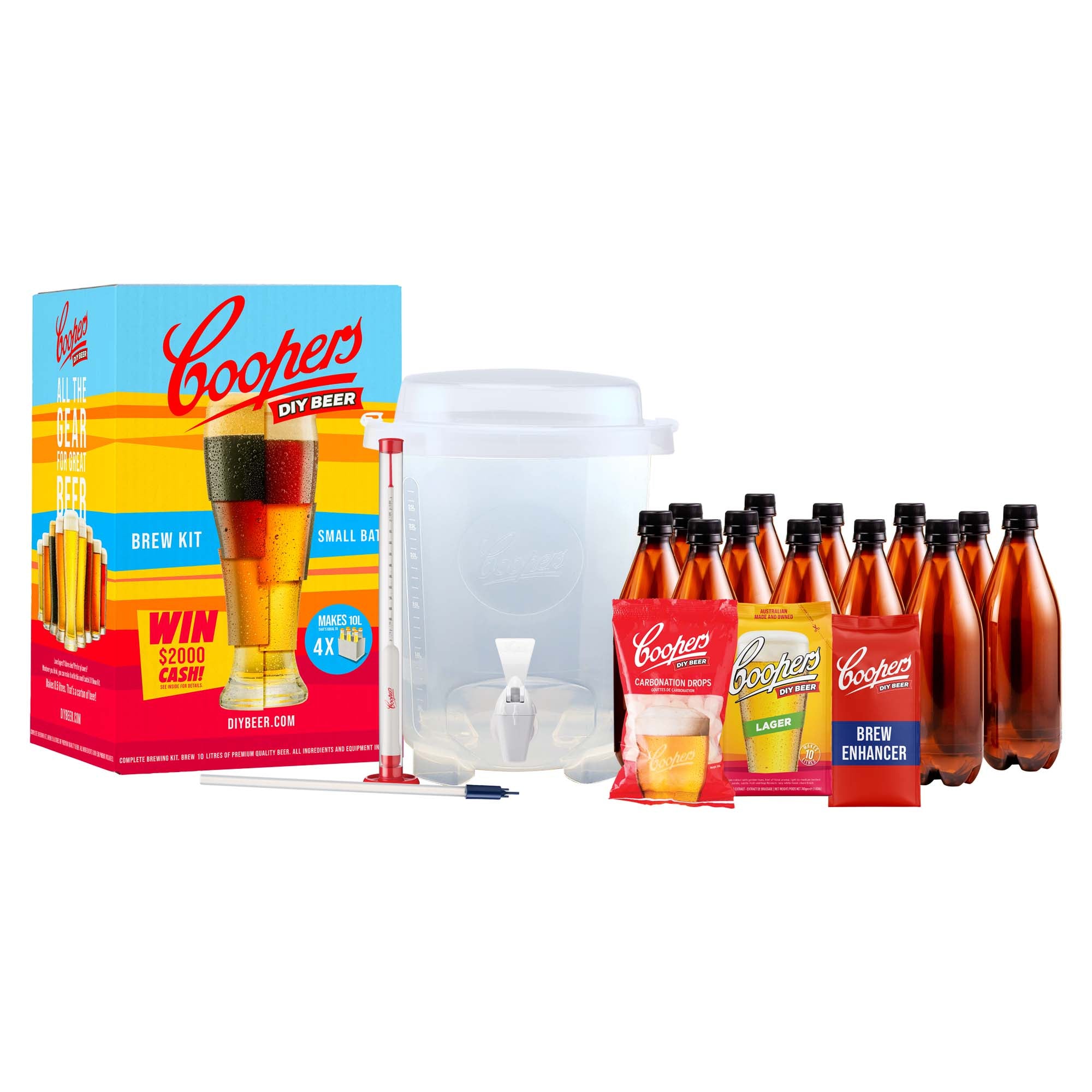
Small Batch Brew Kit (10L)
A small-batch brew kit is a great starting point. It makes a carton of beer and fits easily on a kitchen or laundry bench, making it a smart pick for apartments and smaller homes.
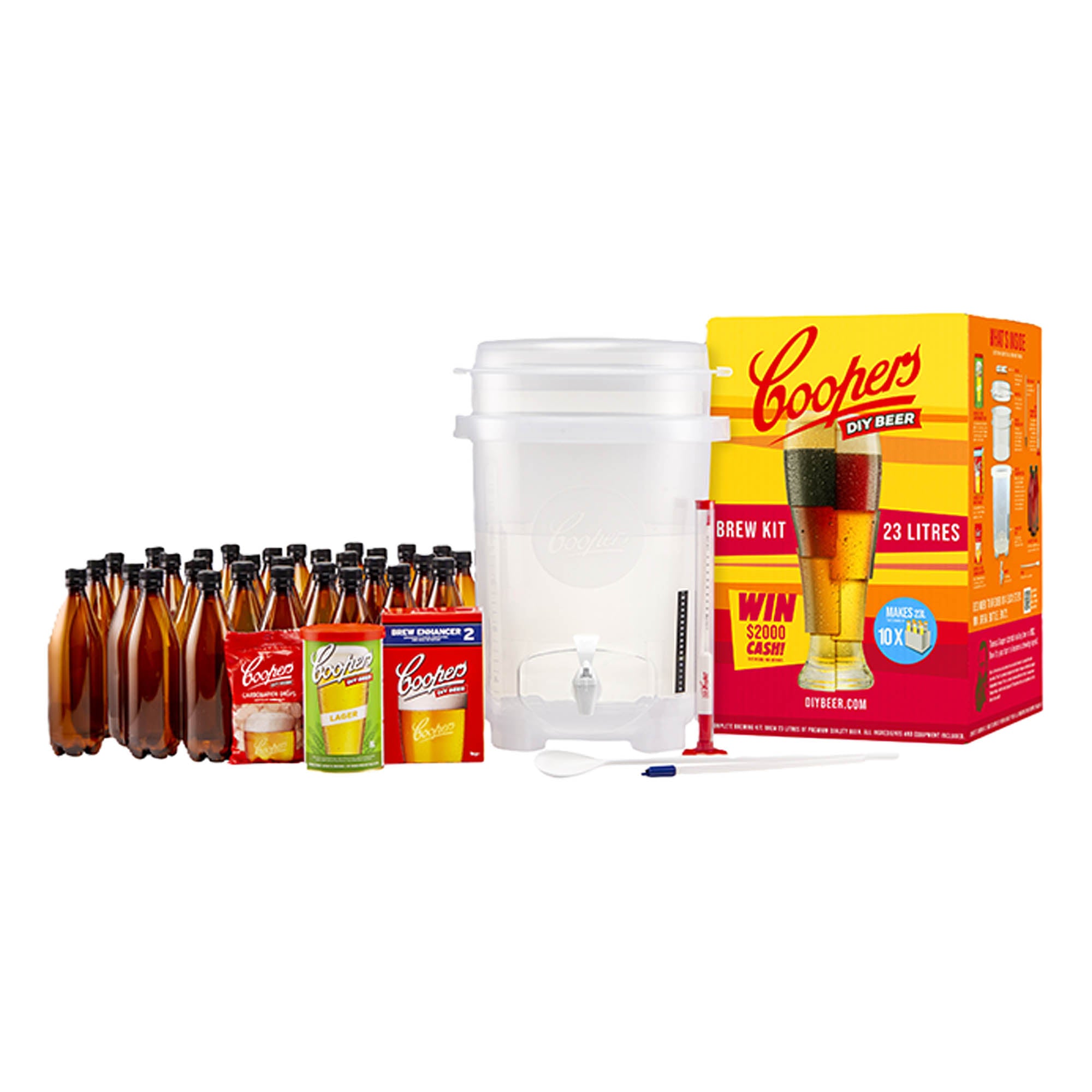
Classic Brew Kit (23L)
A full-size brew kit that makes a bigger batch, delivering better value. A favoured option for those who've found their favourite brews and want a steady supply on hand.
Beer-Brewing FAQS
How hard is it to make beer
Not hard at all for a beginner. With a brew kit and step-by-step instructions, the process is mostly waiting - your active time is around 15 minutes to mix and 20 to bottle. The golden rule is to sanitise everything well. Get that right and your first batch should turn out great. There's also loads of brewing support on our website, and an awesome brew community who are always ready to help a new brewer!
How long does it take to brew beer?
With a Coopers DIY brew kit, it takes about 15 minutes to mix, then your brew ferments over roughly 7 days. Bottling takes another 20 minutes or so, and after about 2 weeks conditioning in the bottle, you simply chill, pour and enjoy.
How much does it cost to make your own beer?
The cost will depend on which equipment you decide to use, or which brew kit you purchase. A starter brew kit is a modest one-off cost, and after that each batch just needs an extract refill and Brew Enhancer - which works out to around 50c per 375ml bottle. Once the kit’s paid off, brewing your own is significantly cheaper than buying.
How should I store my beer, and how long does it last?
Store bottles upright somewhere where the temp is 18°C and away from sunlight while they condition, then refrigerate before drinking. Properly bottled beer keeps its quality for several months, and many styles - like stouts and stronger ales - actually improve with a little age.
What types of beer can you make at home?
Almost anything you enjoy drinking. Popular beginner styles include lagers, pale ales, mid-strength beers and hazy IPAs, plus ginger beer and apple cider. More adventurous brewers move on to stouts and seasonal specials. Swapping the extract is all it takes to change the style.