





How to Calculate ABV in Beer: A Brewer’s Guide
Calculating the alcohol by volume (ABV) of your beer isn't just about putting a number on the label - it tells you how your fermentation performed, whether your yeast finished the job, and how each batch compares to the last. It's one of the simplest forms of feedback available to a brewer, and it requires nothing more than the hydrometer included in your Coopers DIY Beer Brew Kit.
Here's how to calculate ABV, step by step.
The Two Numbers You Need
ABV comes down to two gravity readings:
- Original Gravity (OG): taken before you add your yeast. This measures the sugar content of your wort. More sugar means more food for the yeast, which means more potential alcohol.
- Final Gravity (FG): taken once fermentation is complete. The drop between the two readings tells you how much sugar the yeast converted into alcohol.
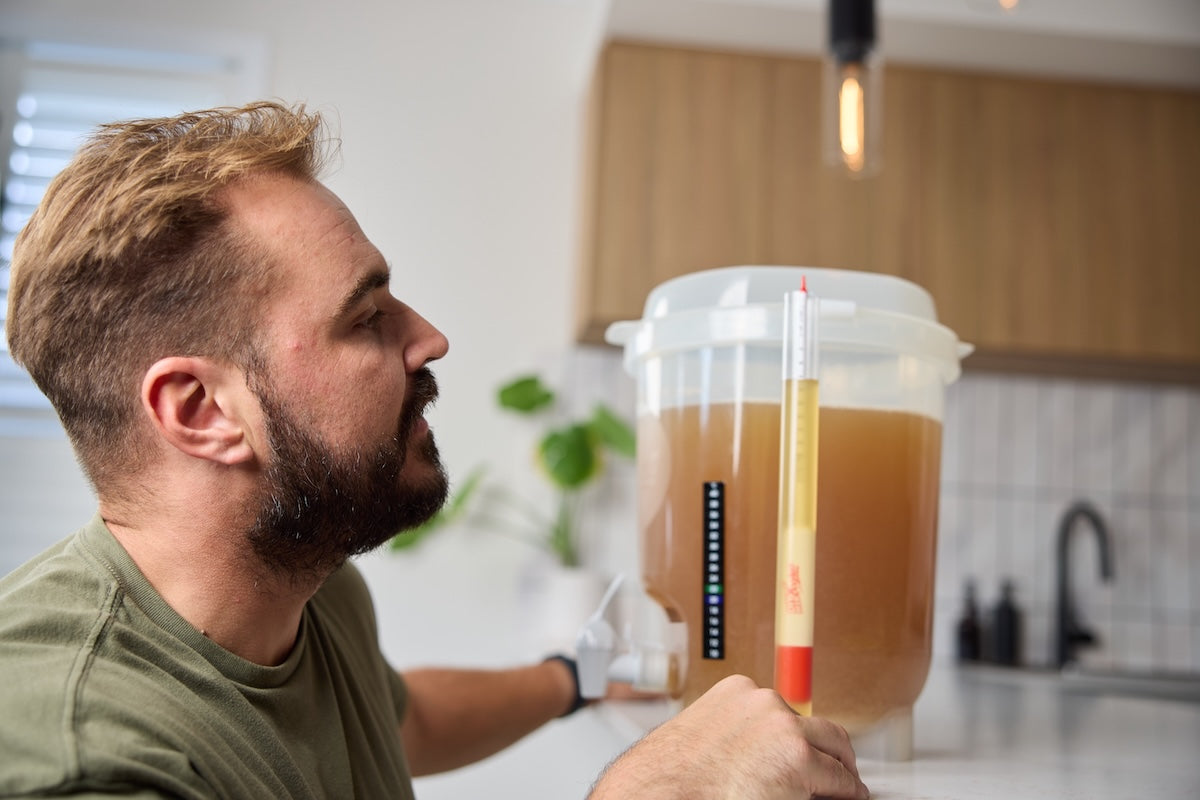
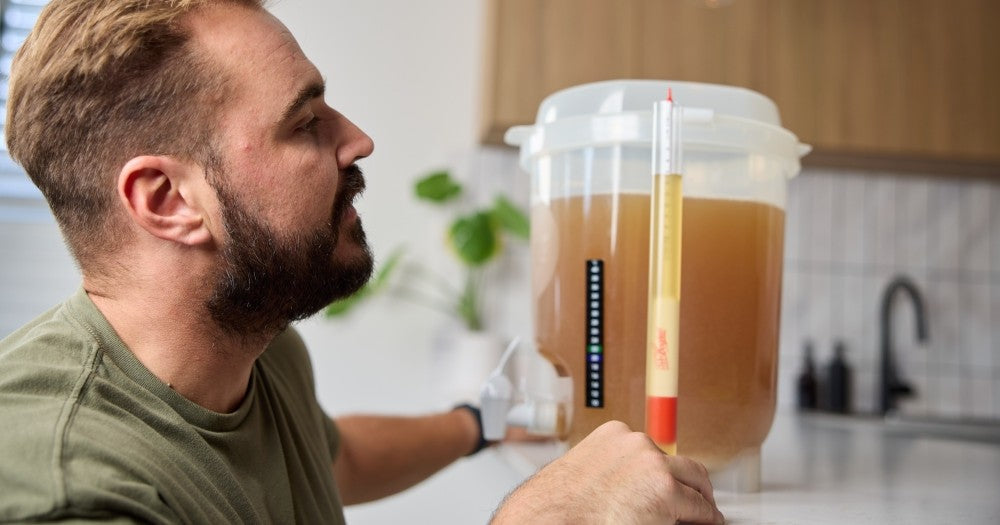
To take a reading, draw a sample of your beer into the test flask, place the hydrometer in, give it a gentle spin to release any bubbles, and read the number at the surface of the liquid. A typical OG for a Coopers Brewing Extract sits around 1038 (read as 1.038 on the hydrometer); a finished beer usually lands somewhere between 1006 and 1015 (read as 1.006 - 1.015 on the hydrometer).
One detail worth getting right: take your readings at the same temperature each time. Our Hydrometers are calibrated to 20 degrees celcius so try to get the sample as close to this temperature as possible for an accurate reading.
The Formula
Once you have both numbers, the maths is refreshingly simple (just like brewing your own beer should be!):
ABV = (OG − FG) / 7.46 + 0.5
Here's a real example. Say your Coopers Pale Ale extract brew starts at 1038 and finishes at 1008:
(1038 − 1008) / 7.46 +0.5 = 4.5% ABV
Right in the sweet spot for a sessionable pale ale. Most Coopers DIY extracts brewed to standard volume will land between 4% and 5%. For those seeing a mid-strength option the Coopers Ultra Crisp has an ABV of 3.5%. While bolder styles like a Stout - particularly one with extra fermentables added - can sit around 6% to 8% ABV.

How Do You Know if Fermentation is Finished?
The most reliable way to know your Coopers DIY beer has finished fermenting is with consecutive hydrometer readings. If your Specific Gravity (SG) holds steady across 2 days, the yeast has finished doing what it needs to, and your beer is ready to bottle.
Getting this step right is very important because bottling too early means you're carbonating with leftover fermentation - and that's how over-carbonated bottles happen. Two stable readings give you the certainty you need for great-tasting beer.
Why It's Worth the 30 Seconds
Tracking your gravity readings batch after batch is one of the fastest ways to improve as a brewer. You'll spot sluggish fermentations early, refine your recipes with confidence, and know exactly what you're pouring every time.
It's the same principle behind any skill worth developing: better data leads to better decisions. Premium quality beer deserves a number you can trust - so put that hydrometer to work.
How to Adjust the ABV of your Beer
Adjusting the ABV of your beer with Coopers DIY Beer brewing ingredients comes down to one thing - how much fermentable sugar is in your brew.
Increasing ABV
There are two main ways to raise your ABV: add Coopers Light Dry Malt or Liquid Malt Extract (LME) - this lifts alcohol while building body and maltiness. The other option is to use dextrose if you want more alcohol without changing the flavour; keeping in mind too much can leave the beer tasting thin or cidery. If you're pushing well past standard strengths, some brewers on the Coopers Brew Community recommend pitching extra yeast or using a yeast starter so the high-gravity batch ferments out fully.
Decreasing ABV
If you’re looking for a lower alcohol beer there are a couple of options: Use a mid-strength brewing extract like the Coopers Ultra Crisp for an ABV of 3.5%. For a light style beer, around 2.5% ABV simply omit the Brew Enhancer and add only the brewing extract and water to your fermenting vessel.



Leave a comment
This site is protected by hCaptcha and the hCaptcha Privacy Policy and Terms of Service apply.